Cowper’s Cut 436: When is abolishing NHS England not abolishing NHS England?

Quite a few ‘Cut’ readers already know what I’m about to describe, but it remains worth setting it down in writing for the understanding of those who do not. The current leadership of the NHS in England is not great on candour or transparency, as seen in its chair’s amusing claim that the current reforms are “not centralising”, and shown by NHSE’s repeated broadcasting, until caught out by the Financial Times, of untrue claims about the ‘successful’ results of the Federated Data Platform (on which more follows).
Under the aegis of Department For Health But Social Care lead non-executive director Alan Milburn, an attempt is under way to re-home the current senior leadership team of NHS England in a new special unit which would sit within the DHBSC.
Current thinking is that Sir James Mackey would get a permanent secretary-type job title as the head of this new unit: this is a clear problem, given that DHBSC already has a permanent secretary in the person of Samantha Jones.
And given that Matthew Style is DHBSC interim second permanent secretary and chief operating officer, it’s hard to think of any departments with three permanent secretaries. As they say in the trade, two’s company: three’s group sex.
Currently, it is planned that Sir James’ new unit working within DHBSC would have its own finance director and director of strategy.
And if you were thinking that this sounds like re-creating NHS England in microcosm within DHBSC just as NHSE is being abolished by primary legislation, then you’d be right. Maybe they could call it the NHS Commissioning Board.
Alan Milburn and Sir James Mackey have apparently bonded over their north-eastern roots and a shared love of football, which is nice for them. This male bonding is a bit laddish for more than a few people’s tastes.
The tension between Sir James and actual current DHBSC permanent secretary Samantha Jones is neither as blatant nor as poorly-kept a secret as the tension some years back between former NHSE chief executive Amanda Pritchard and Health Secretary Steve ‘The Banker’ Barclay (about which this column did write back then). Both of our current dynamic duo are much too professional for that.
But neither is really the other’s kind of person, and their ways of working are evidently quite different.
Mackey has reportedly been explicit that he will not do the job if it is to be in a line management reporting relationship with the current permanent secretary. Clearly, this should disqualify the plan from advancing, but sources confirm that it hasn’t. Alan Milburn never was a subtle man.
The plumbing of power within a system always matters: the leadership personnel matter too. For this move to be worth trying despite its democratic deficit, NHSE’s current SLT would have to be delivering spectacular things.
This they are not doing.
 Rob Findlay

The latest RTT data saw another increase, as did A&E waiting times and ambulance response times, reversing small gains made earlier this year. The year-end waiting list validation sprint that enabled the 65% RTT target to be just hit has a bit of a whiff to it.
It’s important to be fair to Sir James’ main achievement, which is the re-establishing of rigid financial control in the English NHS. This is a necessary but not sufficient condition for serious, sustained and sustainable improvement.
We are seeing no such serious, sustained and sustainable improvement because of what there is not.
There is not a plan; there is not a theory of change; there is not any effective support for improvement and there is no evident curiosity from the English NHS’s national leadership on the root causes of good, bad or indifferent performance. (I may have mentioned this before.) Performance management of provider quality and safety does not meaningfully exist: instead, we have league tables for acute trusts. The impact of Getting It Right First Time appears limited, and hard to distinguish. NHS IMPACT doesn’t have any.
For the past fifteen months, NHS England’s national leadership have been required to nod along with Alan Milburn’s theory of everything and with whatever his ineptly-scheming amanuensis Young Master Wesley ‘200 MP Nominations’ Streeting picked as his theme of the week.
This meant that much lip service has been paid to the importance of the ‘left shift’ or ‘triple shift’ (management jargon phrases, which mean absolutely nothing to the service-using public) and of a neighbourhood health service. Oh, and all the AI you can eat, obviously. But no actual power and very little resource has been diverted to make this agenda anything beyond wafty rhetoric.
Meanwhile, the centralisation of power with ministers and the DHBSC continues apace. The irony is remarkable.
When is abolishing NHS England not abolishing NHS England?
When you try to recycle its senior leadership wholesale.
The idea of regenerating the NHSE SLT is not even a wolf in sheep’s clothing: it is a lamb in sheep’s clothing.
Oh good: A Big Conversation about funding social care
Lucky, lucky us. Speaking on the BBC Radio 4 Today programme, Baroness Louise Casey announced that she wants A Big Conversation, to ask the public who they think should pay for adult social care.
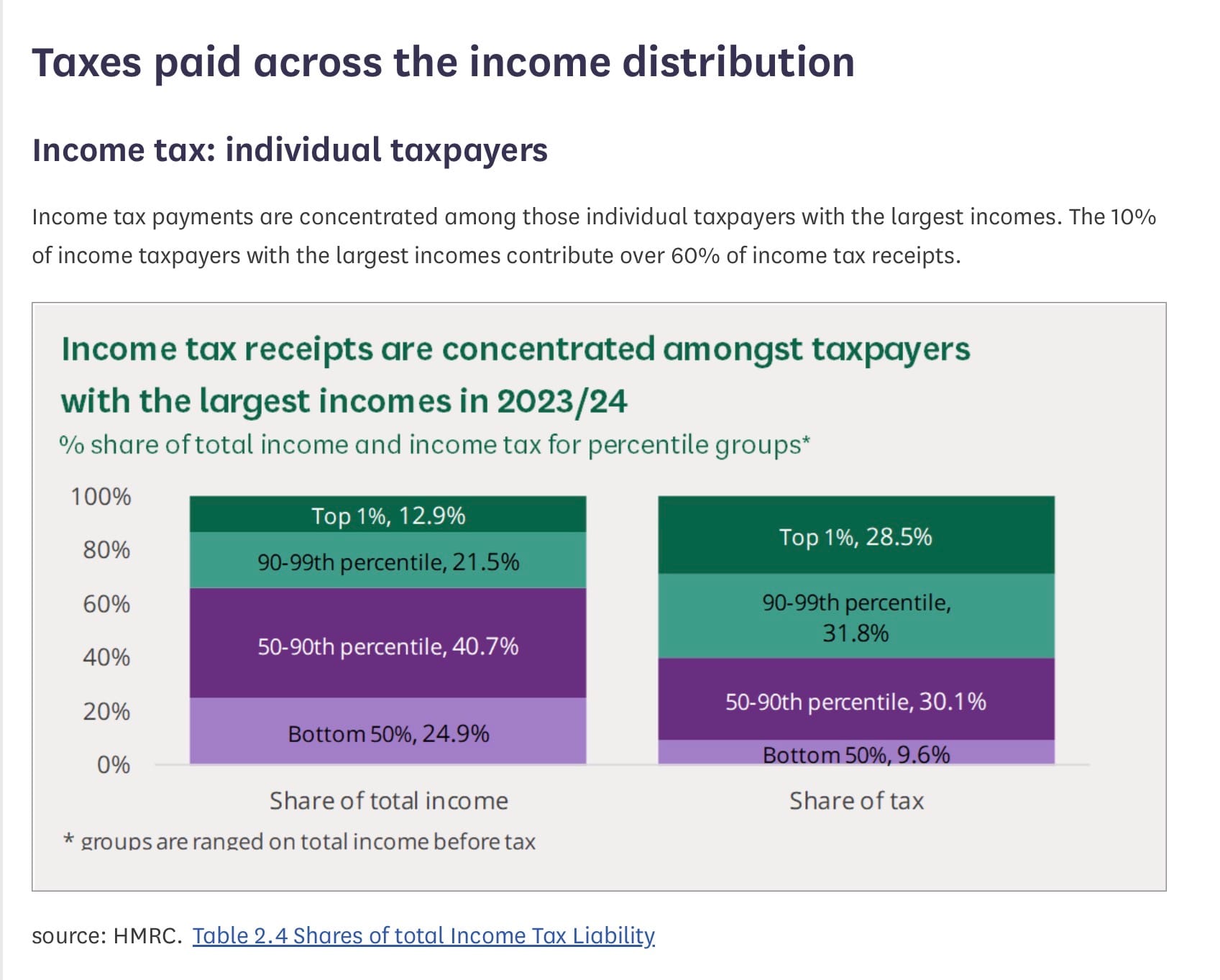
Once this gets beyond the inevitable ‘Socialcarey McSocialcareface’ responses, I suspect that Baroness Casey will get the answer ‘other people’, and perhaps if they are asked for specifics, ‘the rich’ (this despite the fact that the top 10% of UK taxpayers already pay over 60% of all the UK tax that is paid).
Baroness Casey’s team will be "testing the views of hundreds of thousands of members of the public to get under the skin of where the public are" in terms of adult social care, including how it should be paid for and what their role should be in caring for family members.
The public will also be asked what role the NHS should play in social care moving forward, with Baroness Casey telling the programme that the NHS has "withdrawn more and more from communities and into hospitals" in recent years. She added that suggestions that families alone should be expected to care for their aging and ill loved ones are "simply not sustainable".
A major problem with social care funding lies ahead. The revealed preference of our society over recent decades has been to consider that it was not excessively unfair for the burden of self-payment for adult social care needs to fall on those homeowners of the ‘golden generation’ and the ‘baby boomers’ who’d enjoyed exponential booms in their house values.
But this generation is passing through. Their successor generations will have paid far closer to contemporary market values for their homes, and it seems unlikely that the same sentiment will prevail.
The Palantir data debacle rolls on
In recent columns, I’ve covered the ongoing questions about the validity of frequently-claimed data on NHS performance improvements resulting from use of the Federated Data Platform supplied by Palantir (my usual COI declaration: I was a paid member of Palantir’s health advisory panel in 2022 and 2023).
Back in April (and indeed I think earlier, but can’t immediately find it), I wrote about the unverifiability of Palantir’s NHS data claims: specifically about “the evidence basis of the 2022 PR claim to the FT that a “recent pilot of Palantir’s Foundry system at the Chelsea and Westminster Hospital Trust helped reduce the inpatient waiting list by 28 per cent — the equivalent of tens of thousands of patients — for all non-emergency surgeries, including for cancer treatments” (which) was never published”.
During my time on Palantir’s health advisory panel, I repeatedly asked Palantir for this data justifying these claims to be shown to the panel and released into the public domain. Despite some reassuring-sounding waffle, it never was.
I covered in last week’s column The Londoner’s investigation of the ChelWest claims, and the article’s finding that there appears to be no basis for them in empirical reality.
Perhaps unsurprisingly, Health Service Journal’s Joe Talora reports that the Office of Statistics Regulation is “reviewing the issues raised” by NHS England’s recent admission that these widely-used figures do not prove the effectiveness of the FDP.
Joe writes that “the claim the national data sharing platform has contributed to the service carrying out more than 110,000 additional operations has been repeatedly used in official statements defending the use of the FDP. For example, it was recently quoted by health minister Preet Kaur Gill under questioning from the health and social care select committee”.
Live by the data mis-statement, die by the data mis-statement.
This week, Amy Borrett and Laura Hughes of the Financial Times reported that “hospital trusts have admitted there are a litany of errors in the data behind one of NHS England’s headline claims about the benefits of Palantir’s technology after an FT investigation identified irregularities. NHS England has claimed that hospitals have seen a 15 per cent decline in delays to discharging hospital patients after adopting a tool built using the US company’s software.
“However, four trusts confirmed there are errors in the underlying hospital data after an analysis by the FT found they had reported a sudden drop in discharge delays from hundreds or thousands to zero before increasing again sharply — a scenario that would be highly improbable”.
This follows Borrett and Hughes’ article pointing out that “a number of improvements in NHS performance attributed to Palantir have been driven by just a handful of hospitals, according to data that shows some trusts have delivered fewer operations since adopting the technology.
“One hospital trust, Chelsea and Westminster Hospital NHS Foundation Trust, accounts for 84 per cent of the decline in outpatient waiting lists cited by the NHS as an improvement across all 16 trusts using the platform”.
Oooooops, Palantir. Oooooops, NHSE.
That looks awfully like manipulated data.
Who might have done that?
Sigh.
If you are a data company, then this is not the sort of thing that you should do. This is a depressing but thorough FT long read about Palantir.
Covid Counter-Fraud postscript
The Times reports on Covid Counter-Fraud Commissioner Tom Heyhoe’s evidence to the Commons Public Accounts Committee, suggesting that the “fundamental” problem behind PPE losses was the “very lax, uncritical way procurement was taking place, driven by a belief we were going to need to buy twice the amount [of PPE] we ever would do … [in the pandemic] £10 billion was written off … most of that wasn’t fraud.
“These were conscious decisions that were taken that should not have been. It was a very big mistake — a lack of recognition of uncertainty.”
When asked about profiteering and the notorious “VIP fast lane”, which provided favoured PPE procurement access to those with political connections, Hayhoe suggested more focus should be put on the bad decisions of the “customer”: “writing off £10 billion on a £13.8 billion procurement meant we were pushing global prices up because of the scale of our purchasing.
“Ultimately, we should have been a much smarter customer.”
A-haaaaaa! Alan is back!
 Andy Cowper
And speaking of smarter customers … There are certain figures whom you just have a nagging suspicion will have more comebacks than Dame Nellie Melba. The People’s Partridge, former Health Secretary Matt Hancock, is one such person.
Thanks to the ‘Rats In A Sack’ column from the excellent The New World newspaper, I can delight my fellow Alan fans with news of a return to health duty for our hero.
When I last updated you on Alan’s antics, he was making a big return to the world of direct mail. But you can’t keep a good man down, and you can’t keep Alan down either.
So you will be overjoyed to learn about Havilland Health: “a team of highly experienced executives with backgrounds spanning government, marketing, healthtech and venture capital”. Chair: one Matthew Hancock!


And what will Haviland Health do? “We work with health (SaaS, SaMD and SiMD) technology startups and scale-ups that have proven products and established market traction. Our clients typically possess strong intellectual property, scalable business models and, where applicable, CE marking or equivalent regulatory approvals. We work with companies that are ready to establish a significant presence in the UK healthtech market.
“Once we establish mutual compatibility, we tailor opportunities for each client within their relevant sector and commercial focus.”
So that’s nice.
But that’s not all! I wouldn’t tease you like that. That would be mean.
Alan has also reinvented himself as a trust guru.
No, seriously: the ‘Nudgestock’ event promo advertises himself forthcoming talk thus: “what happens when public trust is in your hands? Matt Hancock, former Secretary of State for Health, will explore the complex relationship between trust, power, and data: what it means to hold the driving seat at a defining moment, and why learning to trust data is the foundation of how we will manage our own health over the coming decade”.
See you in the queue, fellow Hancockites! A-haaaaa!
Recommended and required reading
Analysis by the FT’s data guy John Burn-Murdoch on trends in demand and diagnosis for mental healthcare.
Nuffield Trust chief executive Thea Stein blogs on why NHS league rankings don’t work.
Summary of lessons learned by the Kings Fund’s Siva Anandaciva of the NHS Ten-Year Plan, one year on. May it rest in peace.
New for England: NHS Leadership and Management Framework and NHS College of Leadership and Management.
The Financial Times reports on Clerkenwell Health (a specialist in mental health trials) launching an NHS-embedded commercial research site in Doncaster, South Yorkshire, dedicated to treating mental health conditions with psilocybin (the psychedelic compound found in magic mushrooms). Developed alongside Rotherham Doncaster and South Humber NHS Foundation Trust (RDaSH), the aim is to give NHS patients earlier access to investigational treatments and build a prototype for how these mental health trials could be delivered inside the health service. The researchers hope psilocybin compounds — which act on serotonin receptors in the brain — could eventually become part of mainstream care.
A review compiled by the Royal College of Anaesthetists shared with The Guardian finds that “the NHS is unable to perform 1.5m operations a year because of a drastic shortage of anaesthetists … the UK has 2,256 fewer anaesthetists than it needs, and the record shortfall is derailing NHS efforts to tackle the backlog of care”.