Cowper’s Cut 411: “I don’t think we’re centralising at all!”

After 26 years of writing about the politics, policy and management of the English NHS, I’m surprised that I can still be surprised by its national leaders’ aversion to empirical reality.
Yet at this week’s Institute For Government event on NHS structural reforms, when I asked the panel about the unintended consequences of the current system centralisation, NHS England chair Dr Penny Dash said this following thing out loud, in The Real World:
Right. That’s not the literal definition of centralisation at all, is it? Moving everything back into the Department For Health But Social Care, under the Secretary Of State’s fiat? Halving the number of Integrated Care Boards? Making NHS provider trusts jump through new hoops to get a much more limited and weaker version of foundation trust freedoms back?
This comes on top of Health But Social Care Secretary Wes Streeting’s charming attempts to deny centralisation, which I covered in last week’s column.
Young Master Wesley bid that “centralisation has infantilised NHS leaders and stifled the frontline. You cannot effectively run a public service the size of the NHS from two offices a mile apart from each other in Whitehall and Wellington House”; yet also that “I’m constantly told that I will have to fight NHS leaders to deliver change. Quite the opposite, in my experience. They are some of the strongest advocates for it”.
Confused? You will be.
Most of the direction of travel of English health policy since the 1983 Griffiths Report for PM Margaret Thatcher and Health Secretary Kenneth Clarke’s 1989 ‘Working For Patients’ had stated intentions to decentralise power. There have been some explicit attempts at recentralising: New Labour’s abolishing GP fundholding in 1997; Mascara Kid Andy Burnham’s tail-end 2009 ‘NHS preferred provider’ stuff; the ‘more Matt Hancock’ vibes that became the 2022 Act that abolished meaningful independence for NHS England.
This aim to decentralise power hasn’t always been effective: indeed, it’s often been imperceptible in practice to most NHS staff and to patients.
 Mr Andy Cowper
The purchaser-provider split is today widely accepted to have failed to achieve its aims in the English NHS, including in the view of one of its original main UK proponents, the late Professor Alan Maynard, writing for this website back in 2013.
Attempts to decentralise quality and safety to regulators have been particularly ineffective, leaving us with a constellation of shit regulatory Death Stars and a system with too little information on whether its patients’ outcome of care is, in Florence Nightingale’s formulation, “relieved, unrelieved or died”.
The original intentions of both Foundation Trusts and of the NHS Commissioning Board were genuinely decentralising. Andrew Lansley wasn’t right about much (particularly his theory that patient choice, competition and clinical commissioning could drive a self-perfecting NHS operating system), but he was right to say that for the NHS Commissioning Board’s chief executive to have more power, the Secretary Of State had to have less.
Nor can it be argued that NHS England was an effective decentralised body. The extent to which it saw power centralised in and routed through its chief executive Simon Stevens during his tenure was clearly risky, once a less capably dominant leader took over. And so it proved.
The relentless shunting of other arms-length bodies into NHSE (from Monitor and the TDA to Health Education England, NHS Digital and NHS Kiss) produced a vast sausage factory of assurance, oversight and regulation that was no actual use at running the English NHS as a system. Nor could it prioritise, as the ‘Everything Everywhere All At Once’ vibe of the Amanda Pritchard era NHSE showed.
NHS England wasn’t just where your career went to die: it was where you went if you really liked having meetings about further meetings, while completely avoiding taking decisions.
NHSE had grown not just huge, but largely useless: witness DHBSC permanent secretary Samantha Jones’ comments to the IFG event about NHSE spending “approximately 2,500 hours of staff time (that) we lose a day on clearance processes. That is actually the norm of how things get done. Frankly, that is just not about delivery, is it? That doesn’t enable our people to be the best that they can be, and it certainly doesn’t make best use of technology”.
So none of this is written with the view that NHS England did not deserve and need to be hugely cut back. It is, however, written with the view that the Health Secretary will soon realise that being the single senior point of accountability for the English NHS has many downsides and risks.
O region not the need!
Nick Timmins is The Guv’nor of NHS analysis: his timely piece for the Kings Fund explains why it is a mistake not to give the regional presences of the English NHS independence from the DHBSC.
Nick’s key points about the case for semi-autonomous regions to be outside the DHBSC are these: “regions are needed because at their best they act as a two-way transmission service. Telling the centre (for good or ill) about what is really happening on the ground (and thus what might actually be achievable), while telling the ground what the centre most cares about among the zillion requirements and initiatives that ministers have a tendency to launch. And helping enforce that.
“… they have an absolutely crucial role in talent management. These days, there is trouble finding sufficient people of calibre to apply for chief executive posts. Too much pressure. Too high risk. In the past, regions used to actively look after people’s careers, grooming individuals for the next step up – a job that can be better done over a wider footprint than just that of an ICB. This does still happen, but not as actively as it should.
“And an old role needs reviving. Namely ensuring that there are people with a grasp of the whole system, not just one bit of it”.
This all makes perfect sense: don’t expect Team Milburn-Streeting to heed one word of it.
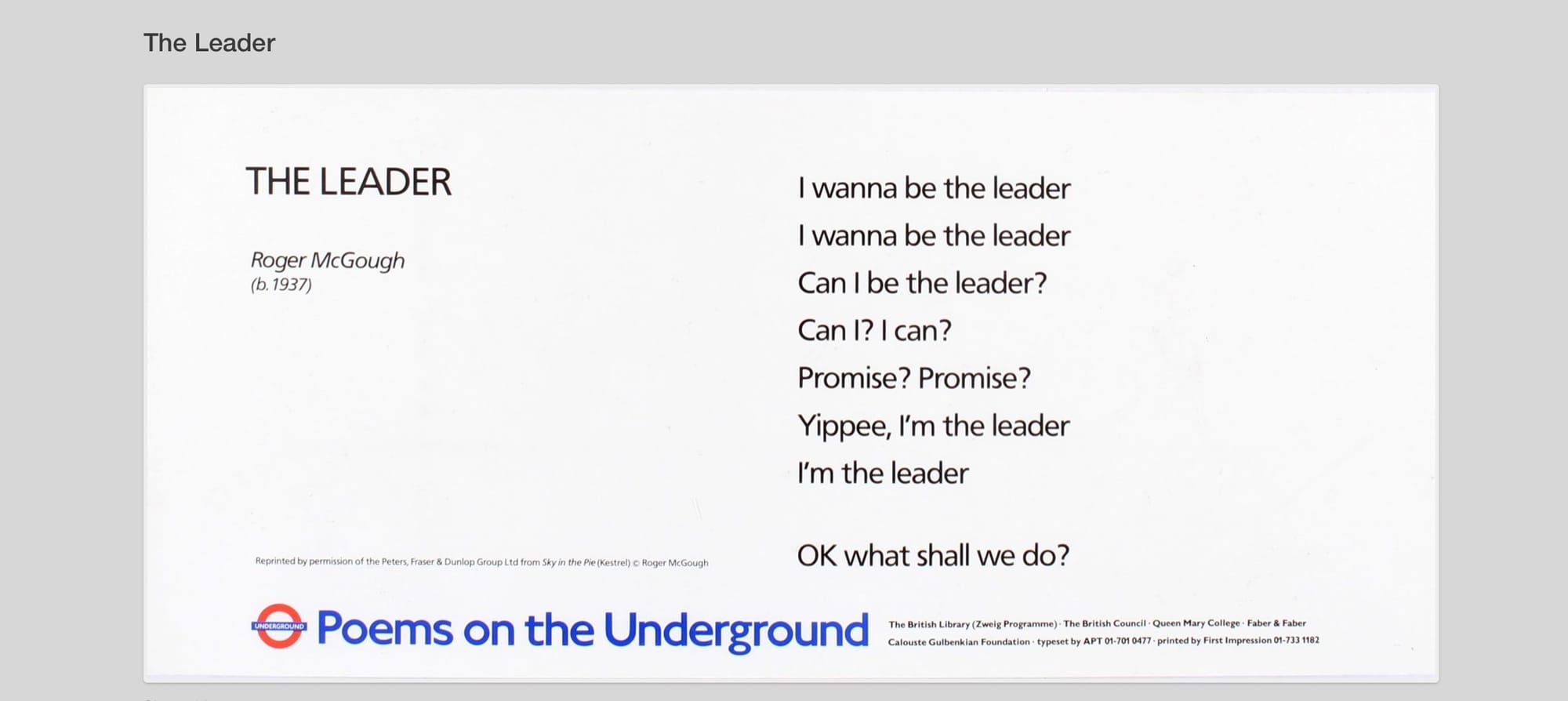
I wanna be the leader!
It’s been yet another busy week for Team Wes Streeting Media Briefing, God bless them. (Has’t their name got a lovely internal rhyme?)
 Harry Yorke, Deputy Political Editor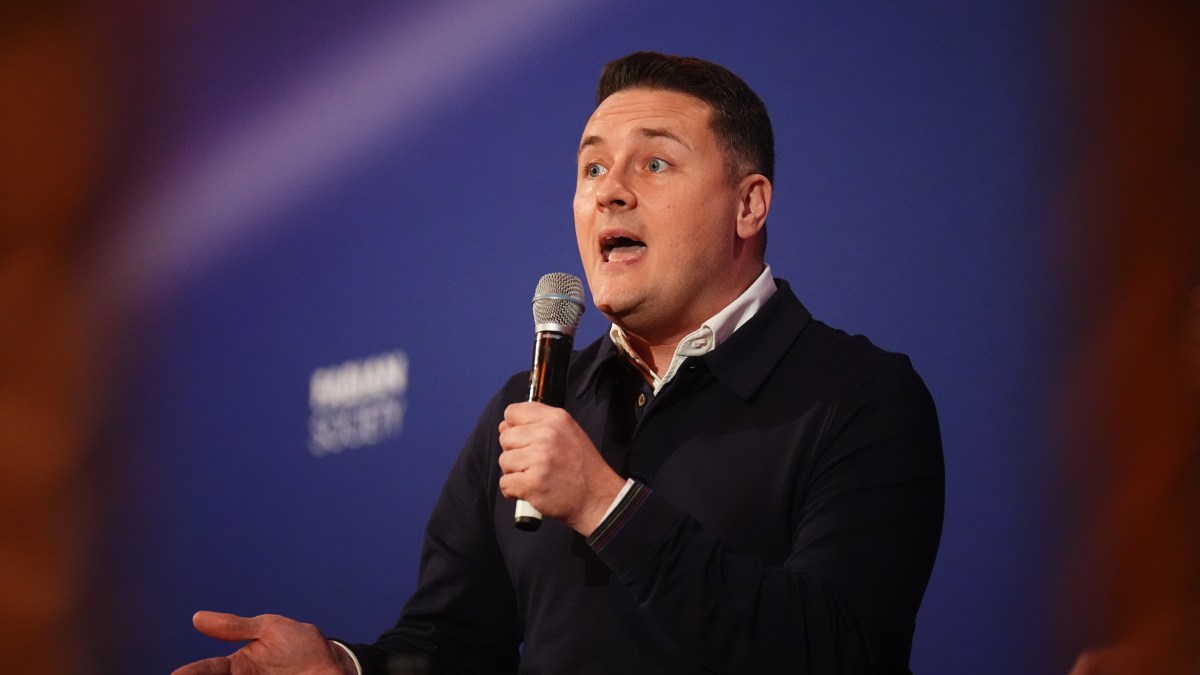
Among the adorable things about this piece briefed to The Sunday Times’ Harry Yorke is the touching faith of Young Master Wesley - sorry, ‘a source close to Young Master Wesley’ - that “there are 250 members of the PLP in our camp. There will be some around and in Greater Manchester who feel they cannot avoid supporting the King of the North. But the vast majority, around 200 people, are absolutely solid. There are decent numbers from the soft left who are saying even if he [Streeting] wasn’t their preferred candidate they can see he is the best candidate available, so that’s about 30.
“That leaves about 150 people left for everybody else”.
As soon as you spot this level of confidence about the numbers of MPs on whose support Young Master Wesley can 100% rely, you’re listening to someone with stratospheric levels of self-belief, but a wildly shaky grasp of how MPs actually operate. Which, yes, stacks up neatly.
This House of Commons Library Briefing describes the process for a Labour leadership election. Candidates seeking to enter the ballot must be an MP (which is why ‘King Of The North’, Mascara Kid Andy Burnham is out), and must be nominated by 20% of fellow Labour MPs. The current rules were last changed in 2021, when the Labour Party Conference agreed to raise the threshold for nominations from 10% to 20% of MPs.
Candidates must also be nominated by:
- 5% of constituency Labour Parties (CLPs), or
- at least three affiliates of the Labour Party (at least two must be trade unions) where the combined membership of nominating affiliates should be at least 5% of affiliated membership
It’s well worth reading Sam Freedman’s piece on the composition of the current Parliamentary Labour Party: there are an awful lot of soft left MPs in that big 2024 landslide. These people are not natural supporters of Wes Streeting, to put it mildly.
Sources close enough to Young Master Wesley to share the same pair of brogues as him also told the ST reporter that “people want an effective, agile, articulate winner”. Bless!
Elective sprinting before you can walk
 James Illman
Health Service Journal’s James Illman got the story that NHS England is ordering provider trusts to run before they can walk. Specifically, that funding will be released for an ‘elective sprint’ to try to hit their 65% RTT year-end target. The total money available for this is as yet unspecified, although HSJ understands it to be in the ‘tens of millions’, “due to be released from contingency funds within NHSE’s existing budget”.
That won’t go far: being released this close to the end of the financial year, it could easily come up against a) already-booked skiing holidays and b) deadline-related price inflation. The release of this money will also “be dependent on the overall projection on the year-end financial position”.
 Zoe Tidman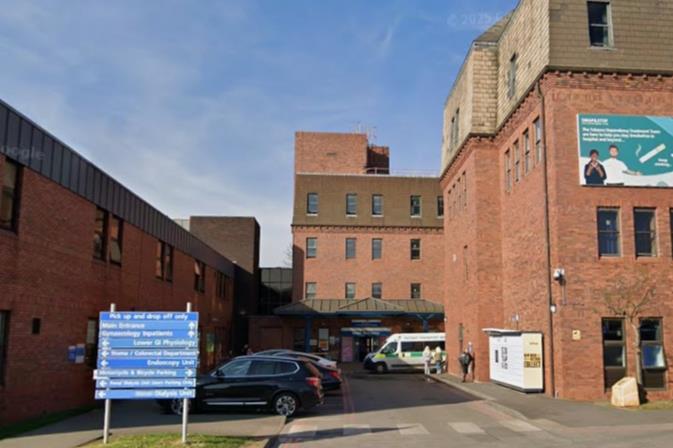
Ahem.
 Matt Discombe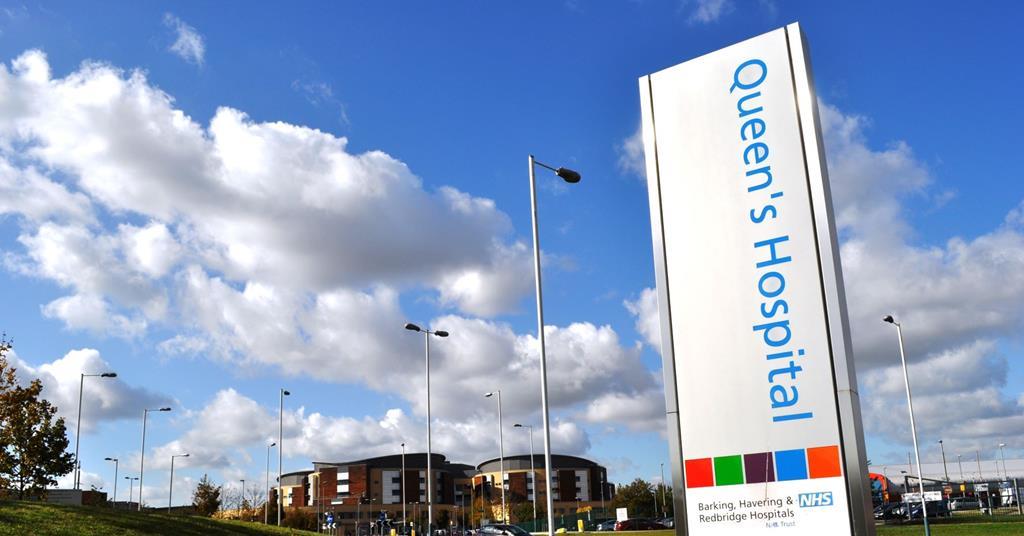
 ByNick Triggle, Health correspondent and Daniel Wainwright, BBC Verify
What a relief that there isn’t a substantial body of NHS providers where 18-week RTT waits have been getting worse over the past year, as BBC News research revealed this week.
Recommended and required reading
The Financial Times covers a new report from the Association of British Insurers on how UK claims on workplace health insurance policies rose by 16 per cent in 2024 against a backdrop of long NHS waiting lists and growing concern that sickness is driving people out of the labour force. ABI members processed private medical insurance claims worth £2.6 billion for workplace schemes in 2024, the highest on record.
The National Audit Office’s update on the New Hospitals Programme is a sobering must-read.
Fascinating talks at the Royal Statistical Society on putting statistics into action to help improve action on the NHS backlog.
The Times reports on a US research study suggesting that the shingles vaccine may offer older people some protections against biological ageing.