Cowper’s Cut 437: Devolutionary new PM Andy Burnham arrives to a centralising NHS Bill. Will the price be a 2026 Croydon List?

The Mascoronation has been and gone.
On Friday, new MP for Makerfield, The Mascara Kid Andy Burnham was elected unopposed as the new leader of The Labour Party.
So on Monday, once Sir Keir Starmer tends his resignation to King Charles III, His Majesty will invite Mr Burnham to form a government: as such, The Mascara Kid will become the UK’s new Prime Minister.
It’s worth catching up on Richard Humphries’ piece for the Health Foundation about what this may mean for adult social care, and also this audit by Phoebe Dunn and Leo Ewbank on Labour’s progress on its health commitments from their 2024 manifesto. We are where we are.
The special sauce of insourcing
In an online hustings with his fellow Labour MPs on Monday evening (assuming you can have a hustings in which there is only one candidate), Mr Burnham criticised an “outsourced state with little accountability”, and said he wanted to see “insourcing” of contracts. This was reported in the Financial Times, along with The Mascara Kid’s comments that he was prepared to “spend political capital” on reforming social care.
In his acceptance speech, Mr Burnham asserted that “NHS waiting lists (are) falling for the first time in years”, which is factually incorrect.
 Rob Findlay
The Mascara Kid is unlikely to be deliberately telling this untruth because it is unlikely that he is a health policy obsessive. Yet.
However, at some point Team Mascara will need to hire somebody who has got a grasp of what is happening in the NHS, which would include the fact that waiting lists are currently going in the wrong direction, and more broadly that the service is not remotely on a trajectory to deliver the Labour 2024 manifesto commitment to return the English NHS to 95% 18 week RTT performance by 2029: the latest point when the next General Election is scheduled.
The Mascara Kid also told his party audience, “let’s have the courage to fix the big things that politics has neglected, like social care, and have the conviction to go out there together and argue for our plans, and let’s have the self-confidence to find common ground with other parties where we can. By seeking more consensus, we may just find the change we make is more lasting. We may find our political discourse in this country becomes that little bit less toxic, and we should be working to achieve that too”.
He is evidently an optimist, which hopefully may stand him in good stead.
Unresolved tensions
It’s hard to predict how big a priority health and social care will be in a Burnham government which will, like all governments, rapidly be beset by events.
But the reform issue will quickly get interesting, due to the unresolved tensions in his apparent plans.
While the abolition of NHS England seems to advance the Mascara agenda of returning the levers of power to elected political hands, the haste with which the current English NHS system leadership is trying to push through more autonomous Foundation Trusts pulls in quite the opposite direction.
Equally, this move to recreate FT freedoms seems dynamically aligned with Burnham’s stated desire for more devolution.
So does Mr Burnham want more centralised political control over public services and goods (the system’s and the Report-stage legislation’s current direction of travel); does he want more devolution and less Whitehall/Westminster control; or does he want both simultaneously?
This could get messy, as in Lionel.
And as for insourcing (and its echoes of Burnham’s 2009 ‘NHS preferred provider’ policy), it will not be long before this fuels firework-filled friction with the current NHS use of independent sector provision.
 Matt Mathers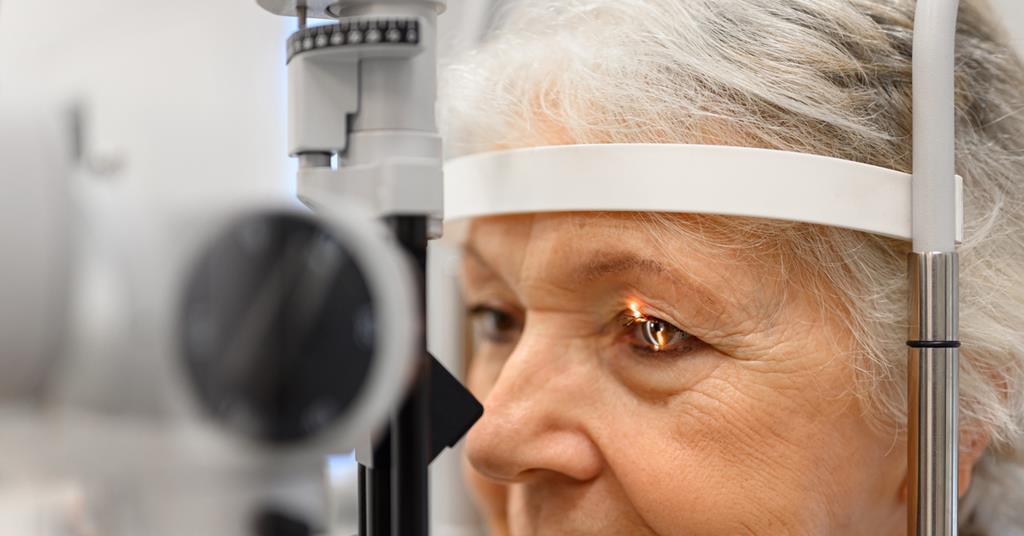
This week saw a prominent news story in Health Service Journal about ten Integrated Care Boards being ‘accused’ of blocking access to private providers of eye care. The providers in question, Newmedica and Specsavers, identified 10 ICBs as decommissioning services, setting minimum waits, and capping referrals. These private providers, in evidence submitted to the Parliamentary committee considering the Health Bill, contended that the restrictions will lead to additional pressure on accident and emergency departments, GPs and other services.
Mmmmmmmmm.
This won’t be an issue that can be dodged for long, particularly not in an English NHS that has a principal if unofficial priority to save money. High time to re-read Rudolf Klein and Jo Maybin’s 2012 classic Kings Fund publication ‘Thinking About Rationing’.
2026 Croydon List, anyone?
Who’s next?
The Mascara Kid’s choice of Health But Social Care Secretary will be telling.
The famously Burnham-adjacent Boris Johnson Fanzine thinks it’ll be Angela Rayner, which presumably is deduced because Ms Rayner was once a care worker and social care reform seems fairly likely.
Well, maybe: although Ange’s refusal to take the role when PM Sir Keir Starmer offered it as her Cabinet return once Young Master Wesley ‘200 MP Nominations’ Streeting stropped off may give us something of a clue as to her interest in the brief.
That was, of course, back in the Starmer Era: those dear, dead days beyond recall.
There are distressingly persistent rumours that The Mascara Kid may give Young Master Wesley Streeting his old job back. This would, at least, be a funny outcome: Young Master Wesley’s near-total disinterest in his brief has not escaped the notice of Westminster insiders (nor indeed of ‘Cut’ readers).
For the Young Master, this would be a punishment beating almost as serious as being appointed Leader Of the Commons: the fate of Andrew Lansley, once his head was for the block.
(The return of Young Master Wesley, like a shitty boomerang, would of course be a dire outcome for the health and social care world - but them’s the brokes. Still, being Health But Social Care Amaneuensis To Alan Milburn would allow Young Master Wesley ample time to scheme and brief against the Labour leadership, just as it did last time.)
Current SOS James Murray could be left in post: this clean young man has not obviously blotted his copybook in his scant few weeks in the job, and the now-non-factional Mascara Kid has to give some figures from the right of the party some jobs. But this doesn’t feel likely.
Were Mr Burnham a heath-watcher, then he should be tempted to promote to SOS the one consistently competent health minister who deeply understands the area and what needs to be done: Karin Smyth. That outcome would reveal welcome attention to detail.
Another option to consider would be Heidi Alexander, who made a very decent fist of the shadow health role in the least prepossessing of circumstances under The Corbyn Supremacy. Heidi is well-liked in the Parliamentary Labour Party; is soft-left; and is fairly competent. I wouldn’t rule out that possibility.
Anyway, we’ll find out tomorrow.
When is cronyism not cronyism? When it’s a Covid19 VIP fast lane!
 David Conn
David Conn of The Guardian was responsible for many of the stories that uncovered the existence of the VIP fast lane for Covid19 contracts. His report of the latest report on procurement from the Covid19 Public Inquiry is therefore a key read.
The new report concludes that £10 billion was wasted in PPE procurement.
Conn writes that “the inquiry has heard evidence relating to PPE Medpro, and (its chair) Lady Hallett, a former court of appeal judge, has reached her conclusions, but they are not yet being published because of a long-running investigation by the National Crime Agency into the procurement of the contracts. Hallett’s findings will only be published after the conclusion of any criminal proceedings”.
Everybody’s New Favourite Noble Baroness Michelle Mone may not find that to be utterly reassuring.
Baroness Hallett wrote in her report: “the ‘high priority lane’, also known as the ‘VIP lane’, was a misguided attempt to give priority to the most credible offers … embedded unfairness” in the procurement. “Some suppliers received favourable treatment because they had connections to government, undermining public trust at a moment when it was needed most.”
“ … The UK entered the pandemic with an inadequate stockpile of PPE and plans that had never been stress-tested. The waste of public money was vast and could have been avoided. Of approximately £14.9 billion spent on PPE, nearly two-thirds – almost £10 billion – was wasted.” The report notes that the Government spent £4.2 billion on ‘VIP lane’ PPE contracts.
Baroness Hallett’s report writes that the Inquiry found "no evidence of cronyism or corruption". This has surprised some people, but that surprise seems unwise.
To find evidence of the cronyism or corruption about which you, like me, will have heard some ripe first-hand stories, would require the wrong-doing people to have written down in disclosable detail what they were doing wrong. Those in question may have been unpatriotic, greedy, trivial or silly, but they were not that stupid.
It’s much easier to keep things verbal only. So let’s say that you held a meeting about pandemic procurement in Downing Street to which you invited a crowd of friendly businesspeople. You wouldn’t write anything down anywhere, but you might say to civil servants on the way out, ‘oh, you’ll make sure that Person X gets a contract, won’t you? Good fellow, Person X. Reliable.’
That would leave no evidence.
‘Cut’ subscription price held for another year
Today (19 July 2026, AKA ‘Cut’ no. 437) marks the fifth anniversary of ‘Cowper’s Cut’ finding a new life as a freestanding subscription product in 2021 (after its genesis as a weekly column on 29 May 2017 in Health Service Journal. Thank you, Alastair.)
Do weekly health policy columns have birthdays? I mean, if the NHS has birthdays … which of course it doesn’t, being a healthcare system and not a person. God, I hate NHS simpering.
Anyway, that’s a lot of weeks, and a lot of opinions from me. As I think you’re aware, I’m grateful to you for sticking with me through it all. I hope that it’s broadly worthwhile: the ongoing subscription renewal rate tells me that it is.
We’ve seen a lot together: a global pandemic; the return of Alan Milburn; Steve Barclay (twice); Dr Therese Coffey; Young Master Wesley Streeting.
Matt Hancock! We survived Matt Hancock! It almost feels as if there should be a ‘survived’ t-shirt, although not everyone may be tall enough for a full list.
So, yes: thank you.
‘Cowper’s Cut’ founding subscribers will notice over the coming days that politics has rubbed off on me, and I have again broken my promise: said promise being that subscriptions would have to increase in cost this year.
I have held the original subscription costs for another year.
I’d like to ask a favour in return: I’d be grateful if subscribers could recommend ‘Cut’ to a person or to people whom you think could benefit from reading it. I may not be the least commercial person in the world, but I’m probably in the top ten: I don’t really know how to sell things. That’s just not my skill set.
It would help greatly if you, as current subscribers, felt able to advocate for subscribing to ‘Cut’ to your colleagues and friends in this line of work.
Recommended and required reading
The FT reports how an NHS recruitment freeze and lack of workforce planning mean nursing graduates are fighting over fewer vacancies.
A long read in the London Review of Books on Palantir and the NHS. (My usual COI declaration: I was paid for my work as a member of Palantir’s health advisory panel in 2022 and 2023.)
HSJ reports NHS England’s consultation on proposals for primary care networks (PCNs) to be gradually replaced by single neighbourhood provider (SNP) and multineighbourhood provider (MNP) contracts, which were proposed in the 10-Year Health Plan. NHSE says PCNs will remain an option “in the short term”, with commissioners given “the choice over keeping the current PCN [contract] or moving to one of the proposed” alternatives. It gives no timetable for ending the PCN option, but says PCNs and SNPs should not “co-exist in the same geography” – GP practices would move from one to the other, rather than run both.
The Times reports that toxic dishwasher fluid was used to clean floors at the Queen Elizabeth University Hospital in Glasgow for more than three years.
Professor Richard Coker told The Times that during his 45-year-long medical career, he has given morphine to dying patients to end their suffering.