Cowper’s Cut 450: Only post-election social care reform can save us now

It grieves me to have to refer to the exercise in journalistic mediocrity, superficiality and populist shitness that is the BBC Laura Kuenssberg Show. But there we go. The BBC can’t be having competent presenters, as the Today programme has been proving for decades (particularly with the exit of Mishal Hussein): that’s what happens when you end up with full-on Conservative ideologists on your board, who then add their fellow travellers to your infrastructure. The BBC’s political naivety and weakness have left it scared of its own shadow (not to mention Charter renewal) for far too long, while its quality continues to nosedive in the absence of any sense of real, Reithian purpose. Its news and politics outputs have almost all been embarrassingly poor for years.
However, Kuenssbergstock is where Mascara Kid and PM Andy Burnham felt he had to go on the eve of Labour’s party conference in Liverpool, to trail his plans for social care reform in the next Parliament, pledging that these reform plans will be a key issue in the next general election campaign.
The PM said that his conference speech on Tuesday will show more leg on his plans for a National Care Service that is universally available, free at the point of use and funded through some form of universal payment. He gave no detail about whether this would include his previously-mooted 10% levy on estates, replacing Inheritance Tax.
Mr Burnham said that his reform plans would "work on NHS principles: the only way you can make it work … everyone contributes and everyone is covered", but "nothing is off the table".
He also suggested that "broken social care will in the end break the NHS", without offering any hint that the failure in progress against the 2024 Labours manifesto commitment on 92% return to RTT 18 weeks by 2029; serial quality and safety failures in maternity; and serial failures in providing timely and safe care in A&E might give us something of a clue that the NHS is already broken.
Mmmmmmm.
This leaves much to discuss: particularly, who will be in charge of the commissioning and channelling of the funding for this seismic change, which will naturally require significant growth of the social care provider sector. The Department For Health But Social Care?
If a 10% estates levy is to be the funding model, will this apply to the estates of those people currently funding their own social care (which is pretty much everyone in the current need cohort who owns a house)?
Then there would be the vexed issue of quality regulation of a new social care service being significantly provided in people’s own homes, on what the PM called a preventative basis.
There is also the question of what happens to legacy social care providers, whose business model may be incompatible with what state funding will cover: this matters, given the available evidence on the mortality associated with moving people between social care settings.
However, the existence of lots of such big questions should not over-ride one key conclusion: Andy Burnham has made a plan to do the right thing. Good for him.
The Penny: still to drop
NHS England’s pre-abolition chair Dr Penny Dash’s latest comments on outpatients at the Kings Fund recently were nothing new. What’s interesting is that the only coherent account of them I can find is published by Nelson Advisors: a firm involved in European Healthcare Technology Investment Banking.
Dr Dash told the event that “at pretty much every conference I have attended in twenty years, someone has stood up and declared that outpatients is an outdated model and that the NHS should get rid of it. And yet the volume keeps growing … the time for saying it is over, and the time for doing it has arrived”.
This is, of course, not surprising.
When the NHS has had a business model and risk aversion model such as OP established for so long a time, then alternative incentives would need to be developed and put in place so the old system could be retired.
This has simply not happened.
It has indeed been exacerbated by the reintroduction of block payment contracts for secondary care in the wake of the Covid 19 pandemic.
The Nelson Advisors’ analysis on why things have not changed is succinct and worth quoting at length: “outpatient appointment is the unit of currency in which the hospital system counts, plans and is paid. Activity is commissioned in appointments. Waiting lists are measured in first appointments. Consultant job plans are built around clinic sessions.
“When the whole architecture of a system is denominated in a particular unit, it is extremely difficult to reduce the number of those units without appearing to reduce the amount of care being delivered.
“ … outpatients is where the boundary between primary and secondary care is negotiated, and that boundary is contested territory. From the hospital's point of view, a follow-up appointment is a way of keeping a patient under specialist supervision. From the GP's point of view, discharge back to primary care often means absorbing work without the resource to do it.
“The system has never resolved this tension, and so both sides have an incentive to keep the patient in the outpatient loop.
“ … the alternative to outpatients does not yet exist at scale. If the answer to "who looks after the patient with stable heart failure who no longer needs a cardiologist?" is "a well-resourced, multidisciplinary community team with access to the patient's full record and a shared care plan", then that team has to be built first. In most of England, it has not been”.
Well, quite.
Dr Dash then apparently followed up with a reprise of her evidence-free riff that primary care is wastefully over-provided with estate. She claimed that “small, fragmented GP practices working in isolation are not a way to deliver a transformed emergency care pathway. They are not a way to deliver a transformed elective care pathway. And they are certainly not a way to deliver improvements in cardiovascular disease, other long-term conditions, or frailty and old age”.
The Nelson Partners author rightly notes Dr Dash’s use of the word "sub-scale", characterising it as “a term from corporate strategy rather than clinical practice, and it signals how NHS England's leadership now thinks about the sector. A sub-scale unit is one that is too small to achieve the efficiencies, the specialisation and the resilience that the market or the system demands.
“The implication is that the historic model of the independent contractor practice, serving a list of a few thousand patients from a converted house, is being described by the chair of NHS England as a structural problem to be solved, rather than a tradition to be protected.
“The solution she (Dr Dash) set out is scale. GP practices need to be brought together with community services, mental health services and specialist services, working as integrated neighbourhood teams rather than as separate organisations passing patients between them.
“Everyone should have a care plan. Everyone should have a single patient record. Multidisciplinary working should be the norm rather than the exception.”
It’s all very neo-Ian Dodge, isn’t it? And it’s likely to end just about as effectively.
National leadership news you won’t officially hear (yet)
What has not been announced anywhere official is that NHS England’s pro tem boss, Interim Jim Mackey this week let it be known that he is looking to hand off control of outpatient appointment money to the new Multi-Neighbourhood Provider (MNP) contracts and general practice.
This, I am told, took place at a closed-doors meeting of the provider trust ‘great and good’, with a few other attendees. I’m inferring that this is the legacy bit of NHS Providers’ ‘chairs and chief execs’ shindigs.
This is an interesting decision, to put it mildly. What evidence does Interim Jim have that MNP teams have the capacity and capability to measure, manage and where appropriate, reduce the funding and deal with any associated clinical risks?
Increasingly, it feels as if the current national leadership of the English NHS don’t even have the good grace to admit they’ve plagiarised GP fundholding because they have run out of new ideas for shuffling commissioning money. And a fundholding-imitating model raises the question of whether this will be optional (as GP fundholding was), and thus two-tier; or mandatory, in the mould of clinical commissioning under the dear, dead days of the Lansley reforms. God bless them.
“Fundholding 2: The Return Of The GP Conflict Of Interest!”: coming soon to a Healthwatch near you!
National leadership news you might rather not hear
 Alastair McLellan and Zoe Tidman
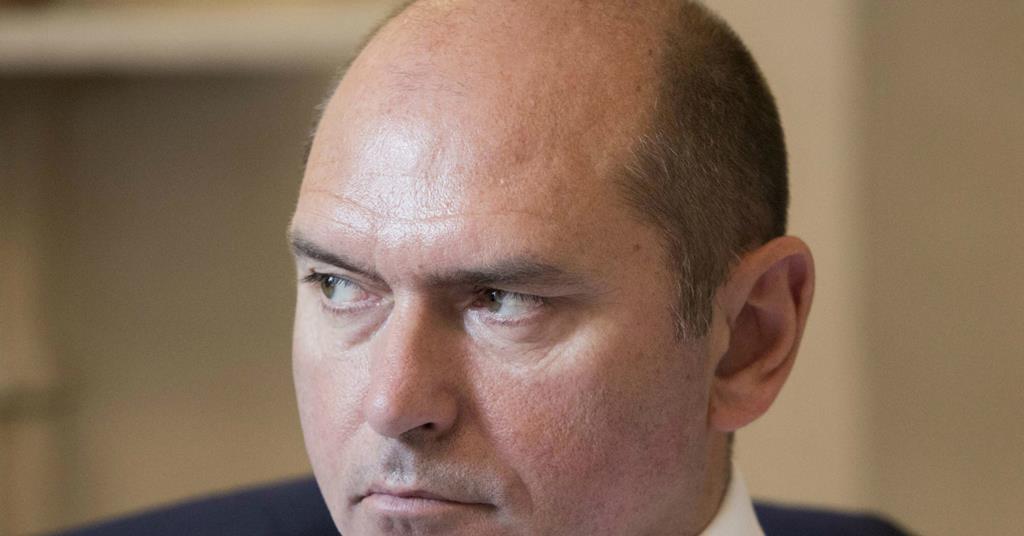
In an entertaining development, NHS England pro tem boss Interim Jim Mackey has decided to rebrand himself as an NHS commentator, just a fortnight after his warning the service about the dangers of “ill-informed media speculation … inaccurate media speculation, which I know is always destabilising and unhelpful”.
Ahem.
I mean, I’m more than fine with some competition in the NHS commentary space. I welcome it. If Interim Jim is feeling a bit underemployed and wanting to branch out, he should go for it. Why not? A little more media speculation can only be a good thing!
But I suspect more than a few people might find the comments in his Health Service Journal interview quite galling.
Interim Jim used the HSJ interview platform to go full-spectrum ‘what useless buggers have been in charge round here?’, which I’d have to characterise as a niche choice to launch his commentary career. But good luck to him: everybody needs a niche (or maybe a bosom for a pillow). One day, I may even realise what mine is.
Sir James used HSJ to warn the sector about the perennially-surprising imminence of winter, saying that several emergency care indicators – including ambulance performance and delayed discharges – were worse than last year ahead of the winter months, and as a result “we do feel like we’re going in quite tight”.
Interim Jim said his message to trust chief executives this week had been “we’ve got about a month to get ourselves sorted and fit to go again … (providers need to) “make their [winter] plans real … Let’s not cruise into it. Let’s get a hold of it now and start making true what we need to make true.”
Mmmmmmm.
He also warned trusts not to “bank” on an elective “sprint” in the last months of the year to hit their targets, as NHS England chose to incentivise last financial year (followed by a collapse back in perfomrance): the overall “fiscal position” now being “much harder” than in 2025/26.
Urgent care performance had “been poor generally”, but Sir Jim said it was still possible for organisations to make “big leaps” in performance.
Mmmmmmmm.
So what useless buggers have been in charge round here?
More remarkably, given the fall-off in RTT progress over several months, Interim Jim also warned about a danger the new government would believe NHS performance progress was “baked in”. He did not specify what such a belief was baked in, but the gradual legalisation of cannabis may be in the frame.
Interim Jim characterised the progress and improvements in English NHS performance as “finely balanced” and “fragile”, which are fine euphemisms for ‘ephemeral’ and ‘illusory’.
So what useless buggers have been in charge round here?
In the ‘we’ve not made up the made-up stuff yet’ apologia, Interim Jim bemoaned that neighbourhood development teams should “not get bogged down in the bloody [contractual] constructs and who’s running what”, and instead focused on identifying the cohorts most in need.
“I’ve still never met anyone who would argue with the principle of [neighbourhood health] … in some parts of the country, it still looks like it’s a turf war – primary versus secondary care, the health service versus the local authority. People have got lost in the distraction of who is running what. The point of all this is, it’s all bloody irrelevant. It’s about the people.”
Well!
He added that NHSE and government were working on how to give the NHS clarity on what new government priorities would mean for 2027/28 planning and funding rules, which would include trying to “carve out some money” from the service’s existing budget to “put into neighbourhoods”.
So what useless buggers have been in charge round here?
In slightly more reality-based comments, he also suggested that Treasury still had unrealistic expectations and requests: “There has been a bit of a frustrating [message of], ‘Well, you did all that last year. No one thought you could do it. Surely you can do a bit more.’”
“Every year I’ve been involved in a national role, directly or indirectly, we’ve had the same nonsense. It’s like they’ve got memories that… just get erased every 40 minutes.”
The Treasury?
Unreasonable?
Well!
More to the point, his complaining about Treasury asking NHSE to redo what they just achieved and a bit more could make one wonder if Interim Jim has ever been on the pointy end of financial and planning discussions in the NHS England system, or indeed spoken to anyone who has?
These columns have been majoring for some months now on the dissonance between the centralising Health Bill now before Parliament and the Burnham love of devolution: Interim Jim has words of reassurance!
Hurrah!
He asserted that the government’s devolution agenda was “fundamental” for the NHS and had consequences beyond “tweaking [integrated care board] boundaries and alignment with [regional and subregional] strategic authorities”.
So, that is a set of words.
But what does it mean?
Recommended and required reading
The Health Foundation’s new report ‘Breaking The Cycle’ looks at how to potentially improve productivity in the NHS.
Sir Jeremy Hunt on his six years as health secretary: “It’s like being in a graveyard. You have lots of people under you, but you’re not sure if they’re listening.”