Cowper’s Cut 433: The Westminster return of The Mascara Kid


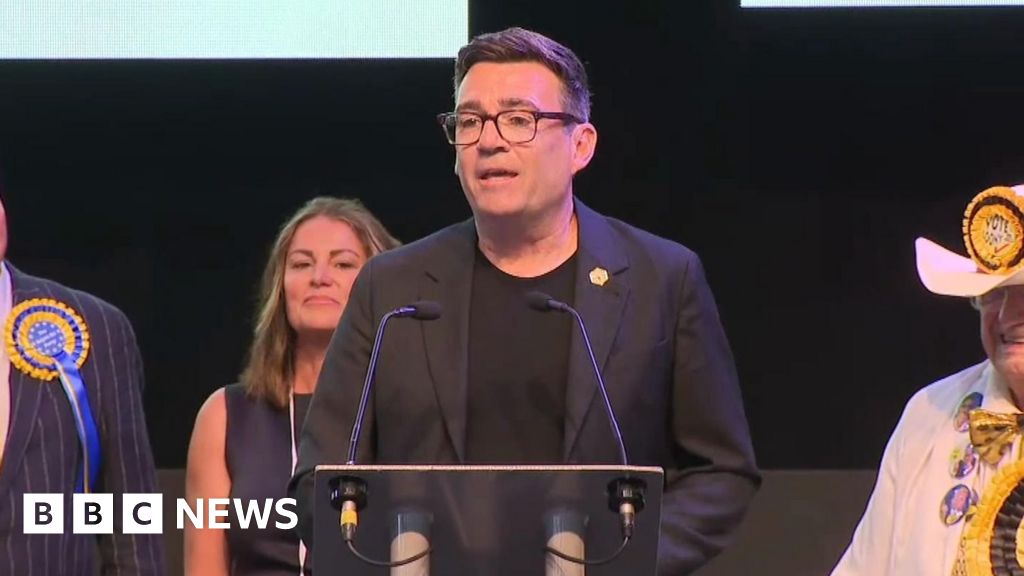
The voters of Makerfield have spoken with remarkable clarity on the Westminster comeback of The Mascara Kid, former health secretary and mayor of Greater Manchester Andy Burnham. It was not even close: 55% of the votes cast were for him.
On show alongside this clarity, we had the elegant symmetry of seeing Nigel Farage’s wealth-chasing vehicle Reform UK outflanked on their right by the BNP-lookalike Restore Britain (whose leader Rupert Lowe was just given a seat on the Commons Public Accounts Committee by the Conservative Party); and proof of the good health of tactical voting as seen in the combined Conservative, Lib Dem and Green votes in Makerfield totalling 3%.
 Sam Freedman and Jane Green and Marta Miori
The most interesting analysis so far was on the Sam Freedman substack, where alongside Sam’s piece, guest authors Jane Green and Marta Miori explored the importance of ‘valence’ for a Burnham leadership.
It is thus far unclear whether The Mascara Kid offers the nation much beyond better communication skills and better vibes than PM Sir Keir Starmer.
The Kama Sutra Kid
Political consistency has not as yet been Mr Burnham’s strong point: I am tempted to rebrand him from The Mascara Kid to The Kama Sutra Kid, so diverse have been the range of his positions.
This Financial Times long read about The Mascara Kid’s Westminster political past offers an accurate summary of Mr Burnham’s track record in jobs. A couple of quotes from fellow Blair-era Cabinet colleagues stick out: one recalling that “he’s a people pleaser. He is very effective at saying what people want to hear but there was never any question at all of Andy saying or doing anything difficult, and that’s a huge problem.”
Another former minister from that New Labour period said: “Some ministerial colleagues recall encountering him as a not very good administrator, there was disorganisation, an inability to make decisions, particularly difficult decisions, and him just wanting to be popular. He’s someone who wanted to be loved rather than someone who was driving forward cultural change in his departments ... he’s more comfortable being oppositional than taking tough decisions.”
The FT piece is good on The Mascara Kid’s likeable, positive vibes-based style. And it ought not to need saying that likeability and positivity are positive qualities in a potential party leader and Prime Minister.
The problem is that the pressing problems facing the country - global political and military unrest, a slow economy with high government debt, poorly-functioning public services and public unwillingness to pay higher taxes - will not be addressed by better comms, better vibes and higher likeability. Clearly, it won’t be hard to beat Sir Keir’s comms, vibes and likeability: the average artichoke can probably manage.
But it looks as if we will not wait long to find out what The Mascara Kid says he believes this week (sorry, year). It increasingly appears that PM Sir Keir Starmer’s declared intention to stand in any leadership challenge is coming into contact with the laws of political gravity.
The result of this is that there may well be a prompt Burnham coronation. Given the successes of Theresa May and Rishi Sunak as the two most recently-crowned (as versus contested) PMs, this should concern us. As a minimum, the Labour MPs, members and affiliates who have votes in this fight should want to hear what Mr Burnham thinks Manchesterism means, and what in practical terms his pledge to make Makerfield his “touchstone” in Government will actually change.
We should remember that Sir Keir won the Labour leadership in 2020 by, in effect, offering competent Corbynism without Corbyn. He lied out of his arse, in other words.
Given The Mascara Kid’s track record of holding strong positions, it is far from unlikely that he will do the same if there is a leadership contest, as Mr Burnham’s fellow-ex-Health Secretary Wes ‘200 absolutely solid MP nominations’ Streeting has pledged there will be. Mr Streeting’s economic vibes are outlined in this word-salad piece he wrote for the FT: those who click through the link will understand why it does not appear in the ‘Recommended and required reading’ section.
It will be a telling sign of Mr Streeting’s integrity and of Mr Burnham’s political nous if the two do a deal to circumvent a contest.
Burnhamism and health and social care
 Jessica Murray
We know a little about the likely impact of a Burnham premiership on this area. The first impact would be that the ‘But’ from the name of the Department For Heath But Social Care is set to be replaced by the official, though inaccurate, ‘And’. Social care reform would move from the Casey Commission’s 2028-reporting long grass to very close to centre stage.
Mr Burnham’s previous reform plans were that national social care would be funded by income from replacing inheritance tax with a 10% levy on all estates, with no allowances or exceptions. It is unclear whether his thinking remains that this would fund a cap on care costs (level of which cap unknown), or a full-on ‘free at the point of use’ service.
 Jessica Murray
It is intriguing that Young Master Wesley Streeting chose this week to leak to The Guardian the leadership’s refusal to make his proposal to ban ‘private equity sharks’ from the social care sector part of the 2024 manifesto. Jessica Murray of The Graun writes that “it is understood that Streeting would resurrect his plans for regulating private equity in social care in a future government”. How timely for Young Master Wesley to do something so Burnhamite: Wesley’s role model Alan Milburn will be furious.
This also raises the interesting question of how agnostic a Burnham-led Labour Governemnt would be about who provides NHS-funded services.
 Mr Andy Cowper
We recall from 2009 not only The Mascara Kid’s plans for a National Care Service, but also his Unison-appeasing ‘NHS preferred provider’ policy.
And we recall his 2015 ten-year plan based around ‘whole person care’, which as Richard Humphries rightly noted at the time, was worryingly light on detail.
Devo Manc (or why blowing up the money leads to top-down national mandates)
Then there is devolution, of which Manchesterim seems to be the proof of concept. The University of Manchester study published in 2024 found significant improvements in health from 2016-2020, but there is a problem.
This is that Greater Manchester blew up the money.
This led to NHS England imposing legal undertakings on the Devo-Manc area, mandating local authorities and NHS bodies to execute massive savings (known as productivity programmes) to bring the system back to a sustainable medium-term footing.
NHS Greater Manchester rolled out a New Operating Model to streamline governance. This recalibrated how decisions are made, centralising some operations away from individual local partnerships to manage costs more efficiently, effectively limiting the ‘free rein’ Greater Manchester initially had over its transformation funds.
Devolution is the freedom to make and learn from your own mistakes, right up until you overspend massively. There is a big lesson here for The Mascara Kid, if he is amenable to learning it.
Recommended and required reading
As a super-fan of the mission creep of ‘bullshit bingo’-friendly US business jargon in the NHS helping us to ‘circle back’, ‘deep-dive’, ‘kick the tyres’ and ‘take this offline’ (side note to comms people: the only people allowed to describe themselves as ‘reaching out’ are Levi Stubbs and the Four Tops), my soul thrilled to this report in the FT about Cornell University researcher Shane Littrell’s study published in the Personality and Individual Differences journal. The paper discusses a tool he built and tested called the Corporate Bullshit Receptivity Scale, that measures people’s susceptibility to nonsense business verbiage. It confirms that being taken in by it is linked with lower levels of analytical thinking and poorer work-related decision making. The NHS must implement the CBRS as a matter of urgency: put it on the Federated Data Platform forthwith!
And speaking of Palantir (by whom I was paid in 2022-3 as a member of their Health Advisory Panel), the real Pink Paper has another well-researched and balanced long read on their work in the NHS. They have several impressive sources, none of whom is me.
And again speaking of Palantir (see above for my usual COI declaration), the FT also carries this follow-up piece on Department For Health But Social Care permanent secretary Samantha Jones apologising to the Advisory Committee on Business Appointments (ACOBA) for breaching lobbying rules over her consultancy contracts, including with a partner to the controversial US technology company Palantir. Jones has been reprimanded by the Civil Service Commission for failing to apply to ACOBA for clearance to take on the work at a time when she was a non-executive director at the department. She worked for four different healthcare companies without applying for prior permission, in what she accepted was a breach of Whitehall rules. Jones did clear other consultancy work, such as for NAPC: more details here.
Donna Ockenden appears to have briefed the contents of her Nottingham midwifery inquiry report appearing this week to Shaun Lintern of the Sunday Times.
Probably the greatest public health intervention of the past two decades in the UK, Parkrun, is nothing to do with the NHS, having been set up by Paul-Sinton Hewitt, a depressed and lonely middle-aged runner. Its millionth event is celebrated in this Guardian piece.
I’ve covered this many times before, but the shortage of pharmaceuticals really does seem to be at crisis point.
Sad and remarkable piece in the Boris Johnson Fanzine about a consultant whose death from a drink-and-drug overdose followed his working nine consecutive 13-hour night shifts across his private and NHS commitments. The senior coroner is to write a prevention of future deaths report to raise the issue of NHS doctors working extra hours in the private sector and not having to declare those hours to their NHS employers.