Cowper’s Cut 432: When the roses bloom again

What a surprise: the enormous drop in the RTT elective waiting list seen in the release last month which allowed the 65% target to be (just) met has been followed by a quite significant rise in the said list.
Fairness caveat: these waiting lists are expected to rise at this time of the year.
 Rob Findlay
But the key problem, as Dr Rob Findlay of Insource notes in his essential coverage of the RTT waiting time backlog data for Health Service Journal, is that “the trajectory for ‘18 weeks’ recovery was missed by a record margin … the waiting list should have shrunk by 33,000 pathways in April to stay on its recovery trajectory, instead of growing by 112,000
“ … So far, the waiting list has come down a bit, but the rate of improvement has been far too slow. Every shortfall against trajectory is carried forward into future months, and the trajectories keep getting steeper”.
Rob also notes that “the March year-end sprint benefited from a surge in unreported removals, as trusts checked their waiting lists and removed patients who were recorded there in error. This surge was also largely reversed in April, which could indicate that trusts were running out of errors to find.”
It’s charitable of Rob to avoid speculation as to whether the Ides Of March removals contained some deliberate ‘errors’. The anecdotal evidence that will emerge on this should be interesting.
A Miracle Happens! There was more money for resident doctors after all!
It’s been a week of unsurprising things: with new Health But Social Care Secretary James Murray having declared firmly that there was no more money to offer resident doctors to end the splendid pageant of political theatre and strikes that has been the BMA Resident Doctors 2008 Pay Differential Historical Re-Enactment Society, leading to the calling of new strikes, A Miracle Happened!
 Hugh Pym and Maia Davies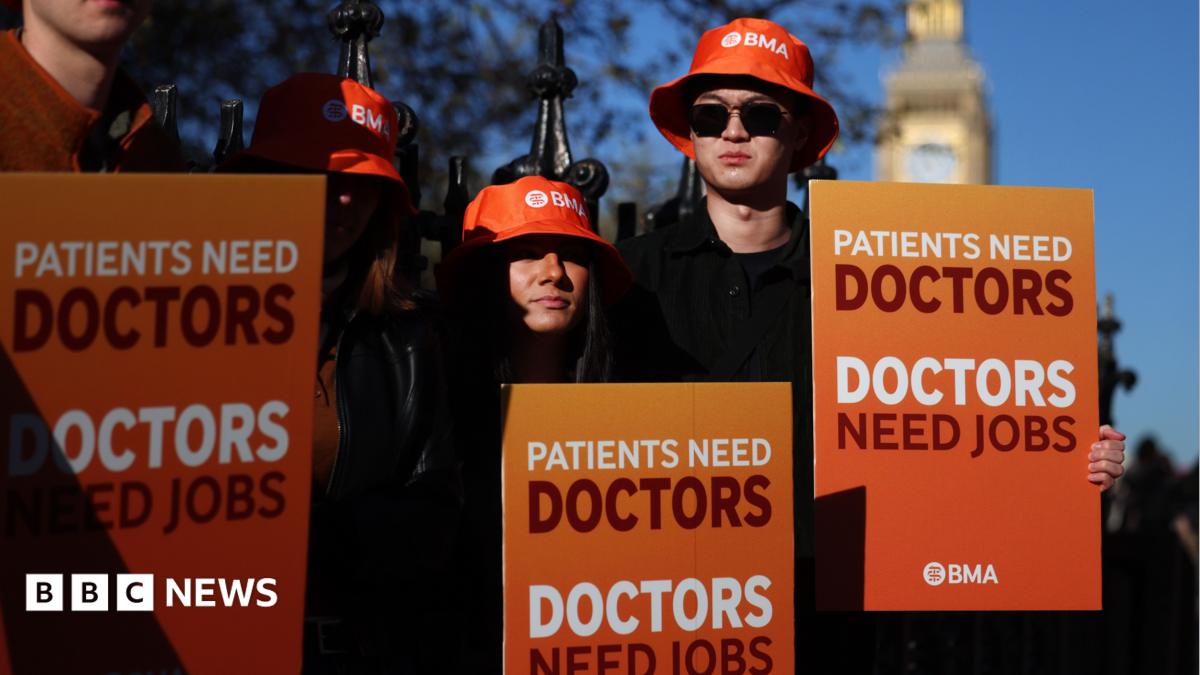
And lo: more money was found!
The increase is for next year’s pay, and the BMA resident doctors’ committee will now ballot its members on the new deal.
The Times reports that “the BMA said that if the latest offer was voted down by its members, it would continue plans for “escalated action” in July. The offer includes an average 6.6 per cent pay increase to be fully implemented by April 2027. The previous offer, rejected in April this year, was a 4.9 per cent pay rise. The government has said there will also be a further 4,500 specialty training places available over the next three years”.
Will residents decide that this extra 1.7% is enough to transform them from unhappy bunnies to happy ones? We will find out promptly, but it bears remembering that most parts of the BMA membership seem unhappy about their pay, and are balloting for mandates for industrial action.
And God bless the formerly dominant and now-ousted DoctorsVote Corbynista caucus of resident doctors, whose response was that calling off strikes showed “how ineffective the BMA had become” and that their leaders put their own “ego and advancement ahead of years of your hard work and sacrifice”, decrying this as an attempt “to sell you the same sad little offer you’ve already rejected”. This charming little rant, from the Corbynistas who don’t believe in wealth creation unless it’s for them, may tip a few voters into the ‘accept’ camp.
ConfedExpo 2026
The NHS’s own version of the Burning Man Festival took place in Manchester this week, with the recently-merged (as in NHS Providers being taken over by NHS Confederation) NHS Alliance’s retro-titled ‘NHSConfedExpo 2026’.
The number of delegates was significantly up on recent years, as one would expect. About 10,000 people reportedly attended across the two days. What did they learn?
In his last conference address as NHS Confederation/Alliance chair, the noble Lord Victor Adebowale chose not to take the confrontational approach that has been a positive hallmark of his recent tenure. From a drama and truth-telling-at-all-costs perspective, this was a pity. But it was also understandable that at the effective launch of the ‘new’ organisation, his Lordship chose instead to make delegates feel a bit more positive about their and the NHS’s achievements of the last year.
Many might think that a tall order. But his comments were still useful. His first theme was of “leadership as a clinical intervention. Stop waiting for permission. The permission is not coming. The structure will change again. The Secretary of State will change again. The plan will be rewritten again. Leadership is the treatment”. And as in his 2025 speech, he also majored on the Inverse Care Law and inequalities.
His final theme was teeing things up for his new chief executive: that of workforce.
NHS Alliance chief executive Sir Ciaran Devane gave an assured debut conference speech, which even dared to advance actual arguments. You never know: it might even be infectious. It’s certainly been absent from the field for a good few years now.
The politically unpalatable duo of the capital drought and the need for explicit trade-offs were his other key themes, although just as importantly, he reminded the audience of the height of the stakes at play: “for generations, support for the NHS could largely be assumed. I do not believe that is true any longer. For the first time, I think we have to earn the right for the NHS to remain free at the point of use and based on need rather than ability to pay.
“If access deteriorates, if inequalities persist, if services fail to adapt to changing needs, or to how people are today, then support for those principles will weaken”.
Devane is Not Wrong about this. The ugly and by now ingrained habits of ‘our’ NHS narcissism, self-worship and simpering (as seen at its peaks with the rise of NHS pseudo-campaigners like EveryGrifter and in the bizarre concept of the NHS having ‘birthdays’: if it has birthdays, why doesn’t it also have a cat?) are going to take some undoing.
It was deeply refreshing to hear the honesty in Sir Ciaran’s phrases about “difficult trade-offs. Some will require choices between patient care, staff numbers and financial balance. Others will need sites to give up their beds to neighbours and to focus on community services which may be locally contentious”.
To put it mildly, these are public conversations that policymakers, politicians and indeed the whole NHS leadership nexus has been falling over themselves to avoid having in these past several years.
Another vital theme (which will replay further emphasis for NHS Alliance as it develops, while intrinsically complicating its relationship with the leadership of the Department For Health But Social Care) is that of a workforce that remains haunted by the pandemic while facing what looks like unrelenting tidal waves of demand. Devane quoted a recent comment made to him about where the English NHS is in June 2026: “the overriding focus on finance at the expense of patients and particularly staff: that will have repercussions.”
He suggested that “the frustration is that we have an alignment of policy between the government, the centre and local leaders, but an absence of some of the conditions required to deliver consistently and at pace”.
Showing a certain genius for understatement, Devane added that “it’s clear we don’t yet have the right culture in place. The centre has, in some places in some times, exerted too much control; micromanaged local leaders; second-guessed decisions; set over-punishing efficiency targets; and has not been seen to listen to the reality that’s in place.
“Some places have a punitive culture that has caused a lot of damage to local leaders – often to those CEOs who took on difficult jobs in challenging systems when it would have been easier not to”. His subsequent assertion that this was now a thing of the past, while understandable, is not only debatable but is strongly debated. The 2022 Messenger Review set matters out very plainly: we have yet to see anything meaningful done about it.
Again on the optimistic front, the speech stated that “we need to create a rules-based system with a clear set of roles and responsibilities, no duplication, with the right national and local balance as part of that – all backed up with good governance and a good culture.
“That will require clarity as to how the NHS will be managed and led within the department … operationally, the NHS will still need managing. So how that is done is important. There will need to be some form of clear visible leadership for the NHS which is on the case 24/7, 365 days a year.
“How that is established, and how it interacts with departmental policy-setting, is a truly critical success factor. It is easy to get wrong, and it needs to be very well thought through.
“What room, with whom in it, will lead the day-to-day drive for performance, reform and improvement? Who will manage the fires, and combine what we used to call ‘grip’ with the empowerment of the wider leadership? Is there going to be a David Nicholson lookalike, or a Hugh Taylor lookalike?”
 Caitlin Tilley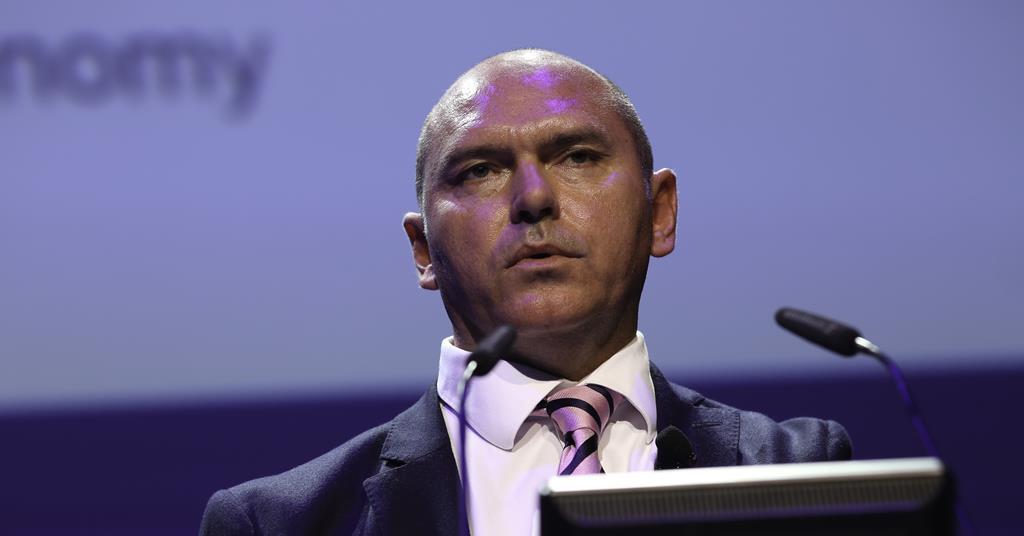
Ahem. It is very clear, as this briefed news story in HSJ confirms, that as close to no thinking about this as possible has taken place. As to the current incumbent Sir James Mackey, I listened to his speech at the time and listened again to the recording before writing this column and I still do not know what he was trying to convey. Some of this is down to his strategically low-energy delivery. Mostly, it is because the public-facing side of a national leadership job is a thing that Sir James deeply dislikes. It really shows.
On the obvious level, as I have been pointing out since 2021, we are in a hugely centralising direction of travel in English health policy. Meaningful NHS independence was tried under the strong political leadership of David Nicholson; the magus-like political supremacy of Simon Stevens; and we then saw its diminuendo fortissimo over the Amanda Pritchard era. It’s been quite a decade-and-a-half.
Nothing visible on the horizon is about to change this: the abolition of NHS England is merely following along with the logic that the Secretary Of State For Health But Social Care’s office should, in Aneurin Bevan’s formulation, reverberate with the sound of knocked-over buckets.
If you want an argument for independent NHS leadership, then you might look at the jamboree of incompetent onanists who have filed past as Health But Social Care Secretary since Jeremy Hunt vacated the post.
We’ve had Alan Partridge tribute act Matt Hancock; Sajid ‘the NHS is a Blockbuster service in the age of Netflix’ Javid; Steve ‘The Banker’ Barclay - twice (twice!); Dr Therese ‘Doing This As A Job-Share With Being Deputy PM To Liz Of The 48 Days’ Coffey; Victoria ‘Bob The Whippet’ Atkins; and then Alan Milburn tribute act Young Master Wesley Streeting. Even if you accept that NHS England had become a wildly bloated and significantly ineffective organisation, that list should make abolitionists reconsider.
There we go: now we add to this list ex-Treasury minister James Murray. The most interesting thing about Mr Murray is likely to be (once we know whether this week’s Makerfield by-election returns The Mascara Kid himself, former Health Secretary Andy Burnham, as a Labour MP to Westminster) whether his tenure as SOS is shorter than Therese Coffey’s.
It would be invidious to go in too hard on Mr Murray’s speech to ConfedExpo. What else could he do? Turn up; read what’s been written; talk up AI; don’t make any spending commitments in the Q&A; try to appear like a clean young man.
But it was bad. In quantum theory, there is the finite possibility of spontaneous creation from nothingness. That speech was a primordial void.
Mr Murray told delegates, “I do not want to tie your hands in red tape”, while not specifying what alternative materials he wants to use for bondage purposes. Betraying a monumental unawareness of that the forthcoming Health Bill is brining his way, he added, “I want you to be free to innovate, to be creative and to get on with what works, because I know that delivery does not happen from behind a desk in Whitehall”.
Recommended and required reading
Will return next week