Cowper’s Cut 430: The new wave of Neo-Labour manifestos say nearly nothing about the NHS
This week, we haven’t been able to move for the new wave of Neo-Labour manifestos from former and nearly-former Prime Ministers and former Health Secretaries.
None of these bid documents say almost anything beyond banalities about the NHS. This seems like a problem if a) you aspire for your ideas to govern a party of government, and b) if the NHS is very much a political issue whose freehold your party believes itself to own, as Labour does.
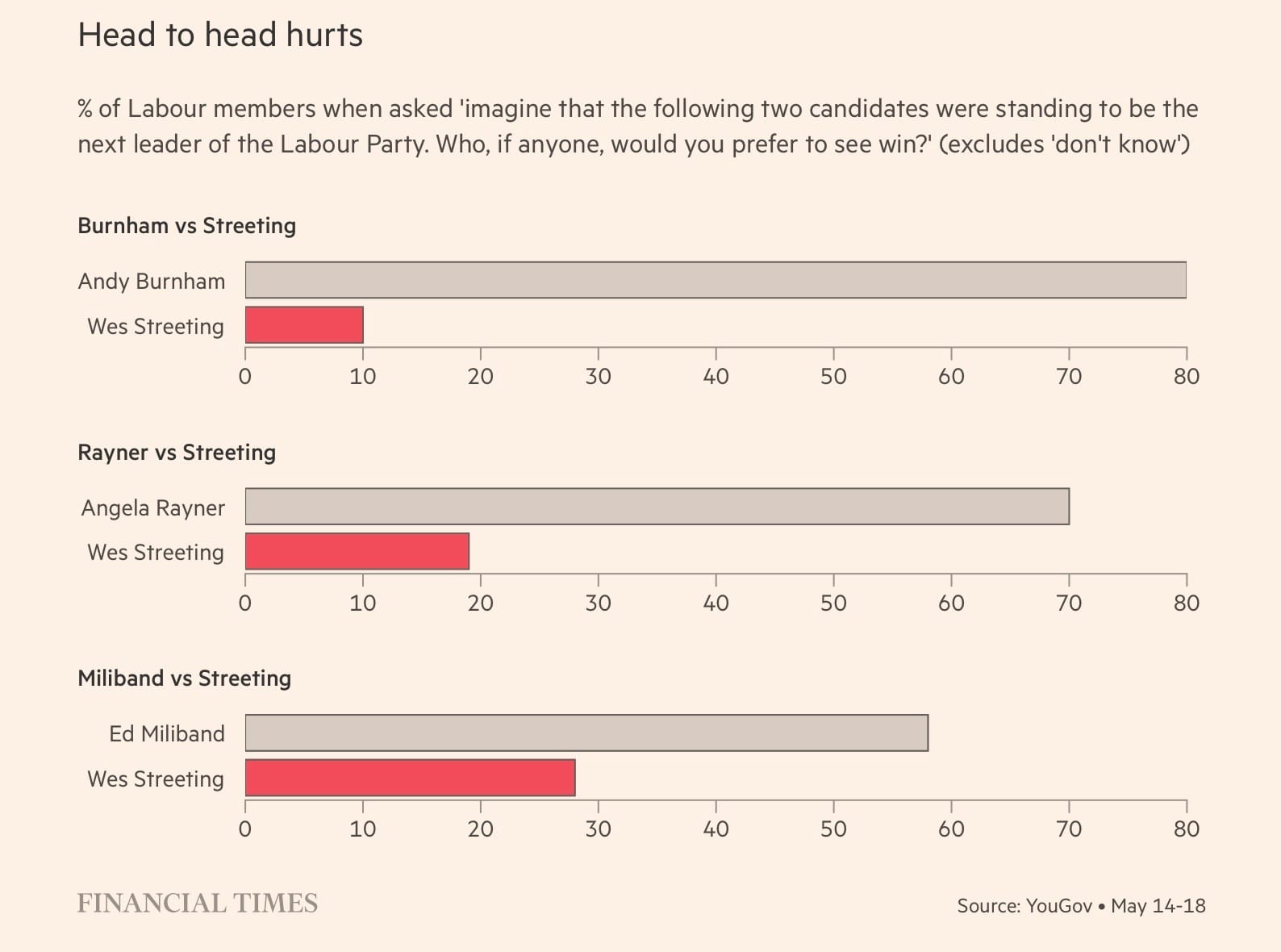
The political tremors that ex-Health Secretary Young Master Wesley Streeting set off with his resignation triggered the earthquake of ex-Health Secretary, Manchester mayor and Mascara Kid Andy Burnham’s move to stand as MP for Makerfield, which would make him eligible to take part in any forthcoming [coughs] Labour leadership contest.
 Tony Blair Institute
Let us start with ‘The Master’: three-times general election winner Tony Blair. With heroic restraint, he doesn’t actually use the title ‘I Was And Remain Right About Absolutely Everything’, but it is 100% the subtext throughout his 6,000-word essay ‘The Labour Party Is Playing With Fire Over Its Future And The Future Of The Country’.
As ever, Mr Blair gives good presentation, turning memorable phrases throughout. It is to the detriment of the content that Mr Blair seems blithely unaware that Labour’s accession to power circa 2024 was not Labour’s accession to power in his time circa 1997, nor anything vaguely like it. The current government had no golden inheritance of a strongly growing economy (although there was in parallel a desperate need to replace a profoundly discredited Conservative Government).
Unfortunately for Mr Blair’s case, he seems blind to the cumulative impacts of the global financial crisis that followed his tenure, and insouciant about the subsequent rise of nationalist sado-populism that led to Brexit.
He does at least mention the Covid19 pandemic and the war in Ukraine, but seems incurious about the changes to the checks and balances of the global rules wrought by the gangsterism of the Trump administration which are accelerating the already-fast rise of China. Arguably fated by his decision to join US president George W Bush in the second Iraq war, Mr Blair asserts that the UK can do no other than hug America close, neatly ignoring the historical lessons of Vietnam. His only argument here is ‘might is right’.
As in his time in Number 10, Mr Blair cannot resist telling a few outright untruths: particularly that “Wes Streeting is a huge political talent and Andy Burnham was an outstanding member of my government”. These statements may be meant to seem generous to the duo of declared candidates in any Labour leadership contest, but they are simply not true.
The Oracle: getting Institutionalised over AI hype
I have banged on and on and on in these columns about the Tony Blair Institute’s Oracle owner Larry Ellison Institute-sponsored shilling of artificial intelligence, which is duly present and correct here: “we’re living through the 21st-century equivalent of the 19th-century Industrial Revolution … are we remotely meeting the scale of that challenge? And what are the opportunities in areas like health and education for transformative change consequent on this revolution and the existential dangers of this revolution when, quite soon, someone sitting in their front room could hack into vital national infrastructure and bring it down?”
If there is any organisation that genuinely doesn’t know about this stuff, then it’s the Tony Blair Institute. Many readers will remember that Mr Blair didn’t even use a mobile phone or email until the end of his era in Downing Street. The TBI’s endless stream of wafty AI hype is actively offputting even to enthusiasts of technology’s potential to help improve the health system.
Perhaps the Larry Ellison Institute noticed the counter-productive impact, which may be why they greatly reduced their funding for the Tony Blair Institute last year, as a result of which the Tony Blair Institute is now in deep financial shit. This deeply-researched piece about the links between Ellison, Oracle and the Tony Blair Institute is a vital read.
Mr Blair calls for Labour to move to “the Radical Centre ... where you put policy first and politics last. So, you begin with the question: what is the right answer? And only once you have that do you engage in the political task of persuading people of it”. This is a homily of platitudes about strategy, not an argument. Had Mr Blair included the phrases ‘God is love’ and ‘please adjust your dress before leaving’, he could have had a full house of clichés.
And if it’s clichés you want, Mr Blair’s one mention of the NHS advocates a hefty dose of AI-based neoliberalism: “the NHS needs not NHS reform but whole-system health-care reform. Moving from cure to prevention. Mixing private and public provision in a fundamental realignment of the two. Reorganising the delivery of health care, for example making weight-loss drugs and other preventative products widely available. Getting rid of all the old shibboleths which have turned the NHS into a point of theological principle rather than a modern service where the transformative power of technology alters its foundations”.
Where to even start with this? Mr Blair wants to expand private provision, while calling for “making weight-loss drugs and other preventative products widely available”, which they already are - privately.
One must have a heart of stone not to laugh. Denial is not just a river in Cairo.
The New Labour era of NHS reforms saw gains made at the margins by strong central performance management and oversight of internal market mechanisms, leading to major improvements, but the main thing that made the difference was the pouring in of vast amounts of extra money from 2000-2010.
PM Sir Keir Starmer managed to keep his riposte to a more manageable 1,600-word long read on Substack, with the characteristically awkward title ‘Tony Blair might not like my plan, but he's wrong: it's changing Britain for the better’.
Sir Keir argues that the message from Labour’s local election massacre is that “my Government needs not just to be better, but also to be bolder. On growth, defence, Europe, energy and opportunity, we do now need a bigger response than we anticipated in 2024”. Unsurprisingly, Sir Keir does not engage with the widespread critique of his leadership that he is dangerously indecisive.
Instead, he highlights spending and his hopes about future performance: “a Labour Government has delivered record public service investment and performance is improving. We are on track to deliver the fastest reduction in NHS waiting times since the service’s creation in 1948”. Well, maybe: although the experts do not seem certain, and see the section following below about the English NHS’s March 2026 productivity miracle.
Sir Keir is, to his credit, not in denial about the global financial crisis’ impact: “the first embers of the populist fire are surely economic and I have long believed 2008 to be the moment they were first lit. Yes, Tory austerity then douses them in petrol and makes everything immeasurably worse.
“But even before that, Britain’s economic model was struggling to deliver higher living standards for enough people or places in our country. And the financial crisis itself, including the necessary bank bailouts, clearly called into question the fairness of the entire economic bargain”.
Starmer takes on Blair’s AI hyping, claiming that AI “is improving our public services, particularly the NHS”. And that’s it.
Little Mascara
The Mascara Kid Andy Burnham is writing a Times comment response piece to Mr Blair’s, and so after some polite ‘good point’ stuff, we get the meat of his argument: Blair’s failure to mention “the main topic of conversation on doorsteps in Makerfield … the fall in the living standards of millions, and the reality that life has got harder for most year on year since the financial crash in 2008”.
He expounds his view that regulation is necessary and valuable, as is the ‘good growth’ that Burnham believes has been pioneered in Manchester.
The same critique of the Blair argument is deployed by Young Master Wesley Streeting in his Guardian comment piece: “inequality – the economic, social and democratic fracture running through modern Britain – is treated as peripheral rather than fundamental. But inequality, rather than being incidental to the crises reshaping western democracies, is actually their cause”.
Young Master Wesley goes slightly further over the same ground in this Sunday Times interview: still nothing on the NHS or social care. The only line of note is one that Labour came into power “underprepared” and “lacking in any sort of intellectual curiosity”. Has someone been forwarding him copies of ‘Cut’?
The ST article also reports that “Streeting, for example, did support the use of Palantir’s AI software in the NHS to improve patient outcomes. But only reluctantly — one of his “final directions” as health secretary was to order a review of the contract to reassure the public. He views Peter Thiel and Alex Karp, Palantir’s American founders, as “Blofeld-style villains” and finds much of what they say “absolutely repugnant”.”
Mmmmmmmm. The Young Master’s certainly tacking hard towards the current Labour Party’s soft-left base here: I wonder whether they will be convinced by this Damascene, if not Burnhamesque, volte-face?
What is fascinating across all of these pieces is the sheer scarcity of references to the NHS and social care: the two public services that most of us can imagine needing to use in the future.
Clearly, this debate is about who should be the next Labour leader (and all four participants genuinely think it is them), and not about health and care. But it feels telling that the subject is so peripheral, and when touched on at all, it’s predictably. It doesn’t scream ‘fresh thinking’.
The English NHS’s March 2026 productivity miracle
 James Illman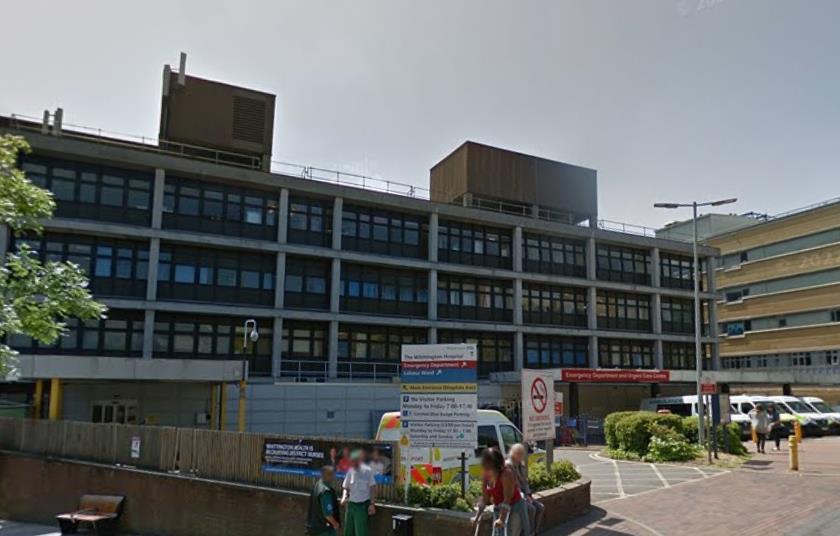
Relying on miracles is an optimistic approach to public policy, as the great Nigel Edwards frequently observed. I wrote two weeks ago that the details of how the 65% RTT target was apparently achieved would be worth following. So it has proved.
Health Service Journal reports that 21 provider trusts delivered their entire 2025-6 elective recovery in March 2026. As well as wondering what these miracle-workers plan to do for an encore, it is hard not to share the conclusion of waiting list expert Barry Mulholland, CEO of consultancy MBI Health: he told HSJ that where trusts had “effectively delivered their entire annual recovery in March alone… that is extremely hard to achieve through ‘normal’ improvement activity”.
“It does not mean the gains are fake, but it does suggest fragility, risk, and raises questions about the overall sustainability. Similarly, I would want to understand the changes that have been made by the trusts which made large structural improvements, to see what enabled the consistent improvement and if those changes can be replicated more widely”.
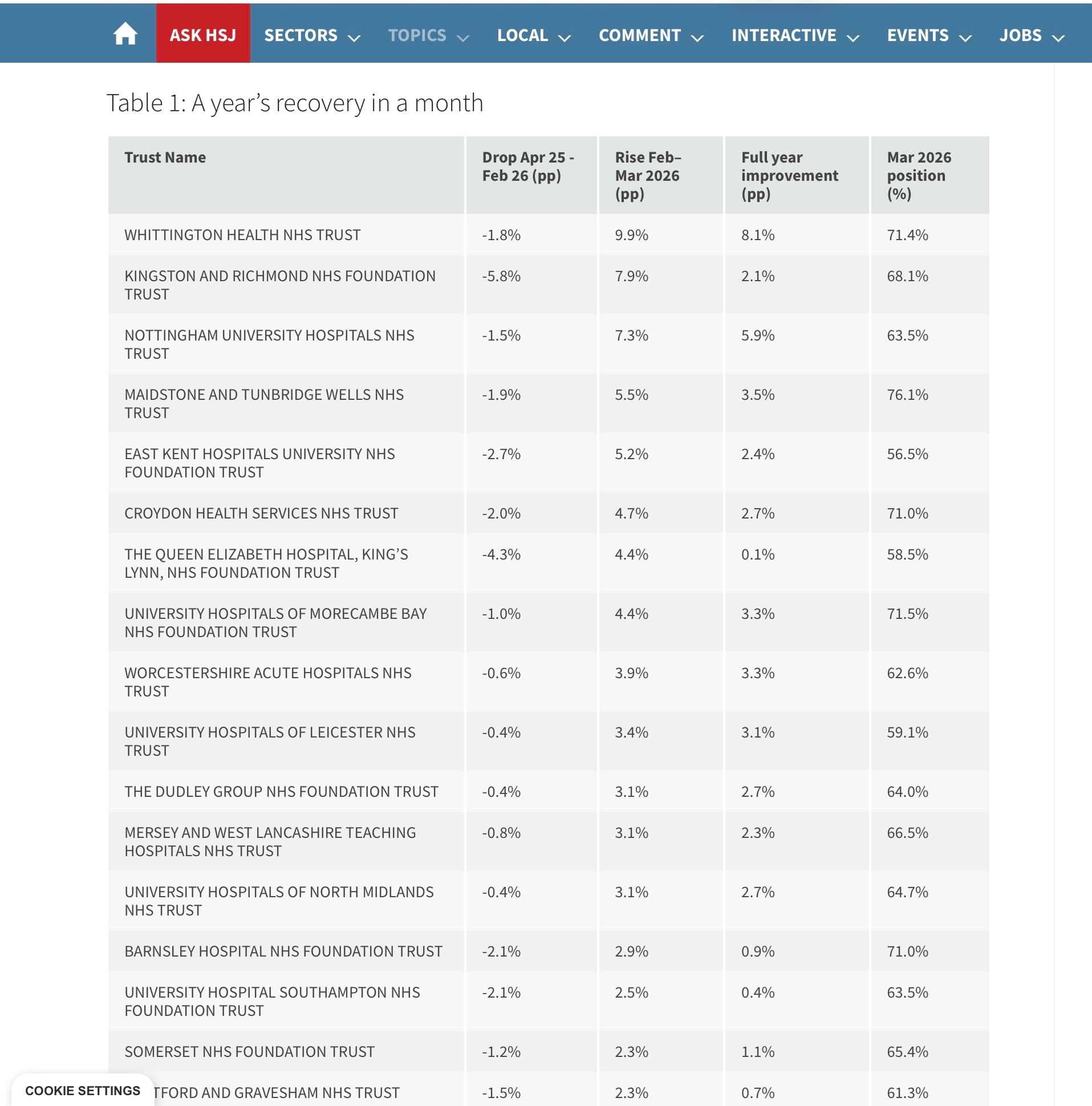
HSJ’s James Illman’s commentary points out that “the largest percentage point improvement in March, of nearly 10 points, was at Whittington Health Trust. Its 18-week performance fell by 1.8 percentage points from April to February, then recovered to a full-year improvement of 8.1 percentage points (delivering 71.4 per cent in March).
“WHT was followed by Kingston and Richmond Foundation Trust (7.9 percentage points) and Nottingham University Hospital Trust (7.3 percentage points), which had also both seen their positions worsen up until February”.
There is, of course, no productivity miracle at work here other than that of increased funding via the ‘elective sprint’ money. It may at some point occur to the new ministerial team and their advisers that if they want to see the reforms that will durably expand provider capacity to meet the considerable demand that waiting lists represent, year-end pots of special cash will not achieve it.
Recommended and required reading
The BMA’s GP committee leadership explicitly wants to privatise and directly charge patients for NHS primary care under the brand name of ‘alternative service provision models’. Yeah, didn’t see that one coming, I must admit.
The Financial Times reveals that Department For Health But Social Care permanent secretary Samantha Jones is a CAPITALIST, who has done private sector health and care jobs and had private sector investments! And declared them, in line with the rules … most of this being already well known from HSJ coverage and from her application to ACOBA to consult for G Square Capital: its advice in relation to her request is also here.
 Vicki Loader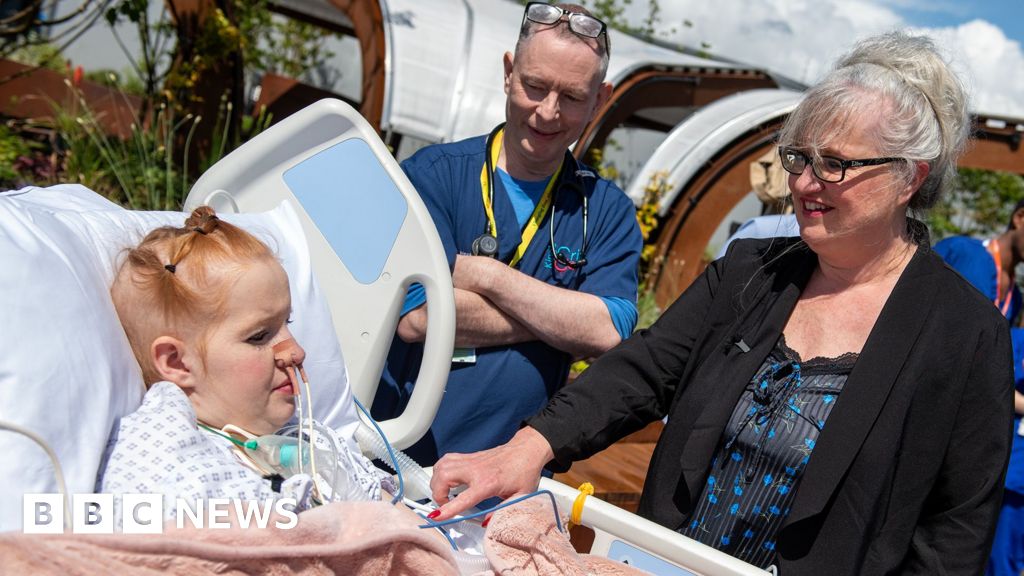
Well, that’s one way of reducing corridor care: BBC News piece on Kings College Hospitals’ opening the first rooftop, open-air intensive care ward, funded by the hospital’s charity.
Alastair McLellan
A rightly cutting piece by HSJ editor Alastair McLellan on the University Hospitals of Liverpool’s ill-considered attempt to clinically cover up the news of their staff’s illicit accessing of Southport attack survivors’ medical records.
The Nursing and Midwifery Council goes from strength to strength: Guardian reports that 15 professionals whom the NMC should have banned from ever working in healthcare in the UK because they had broken the law. These nurses and midwives told the NMC about their criminal convictions when they applied to join or stay on the regulator’s register. However, NMC staff who assessed their applications did not refer them on to an assistant registrar at the regulator to investigate and decide if they could treat patients, which they should have done.
The Academy of Medical Royal Colleges’ response to the Government’s online safety consultation is a concerning yet unsurprising read.
I know it’s bad to reference yourself, but this ‘Cut’ from September 2024 really does bear re-reading, including as it does a chunky quote from Alan Milburn’s infamously-deleted 2014 NHS Providers ‘Seizing The Opportunity’ lecture.
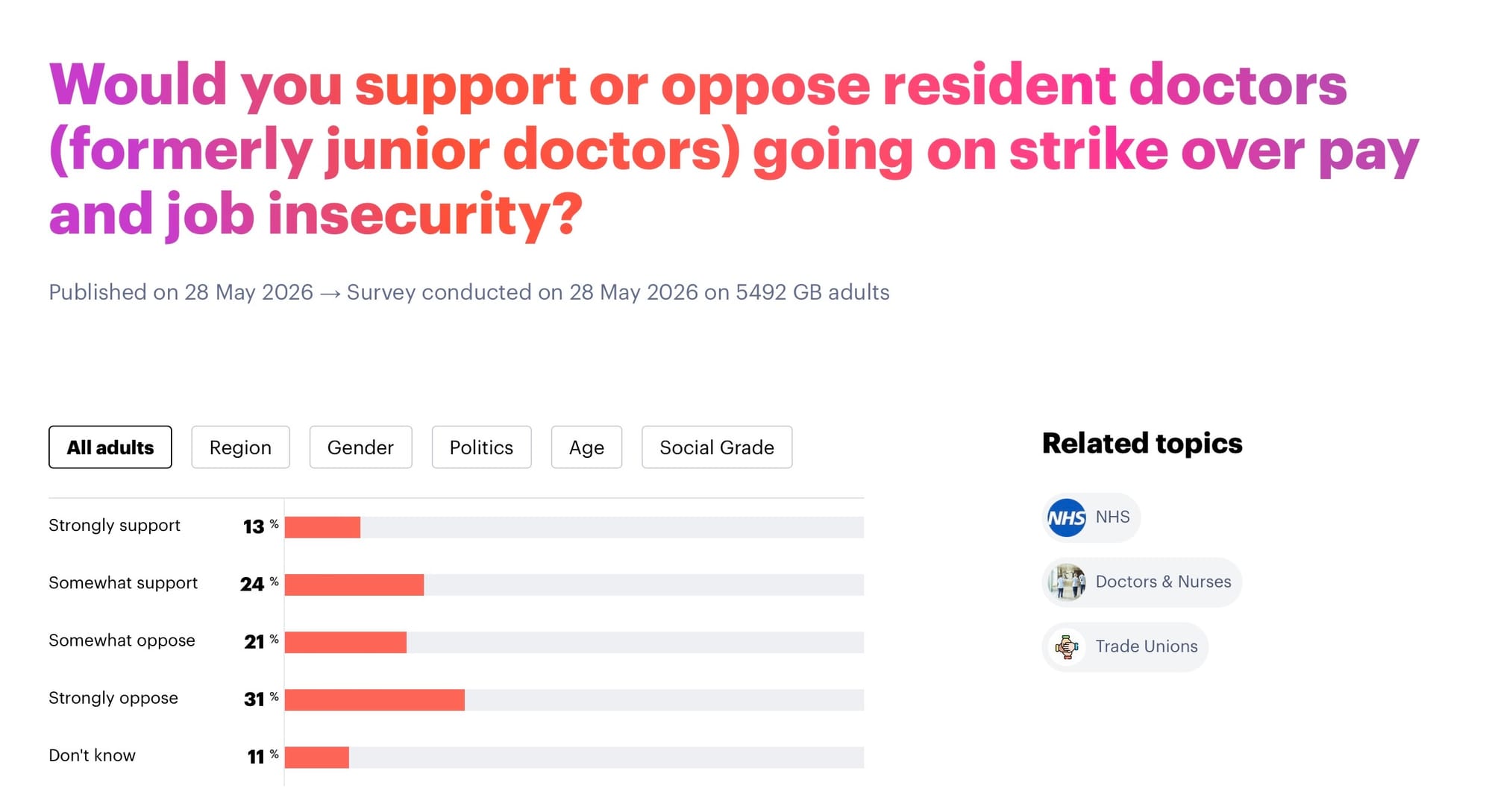
What a surprise: the BMA resident doctors’ committee is calling more strikes 15-19 June, in aid of its long-running and brilliantly successful 2008 Pay Differential Historical Re-Enactment Society campaign. In 2008, almost all of today’s resident doctors hadn’t even done their GCSEs. What a shame that no medical trades union for doctors existed back then: thank goodness the BMA has since been created.