Cowper’s Cut 418: Culture wars
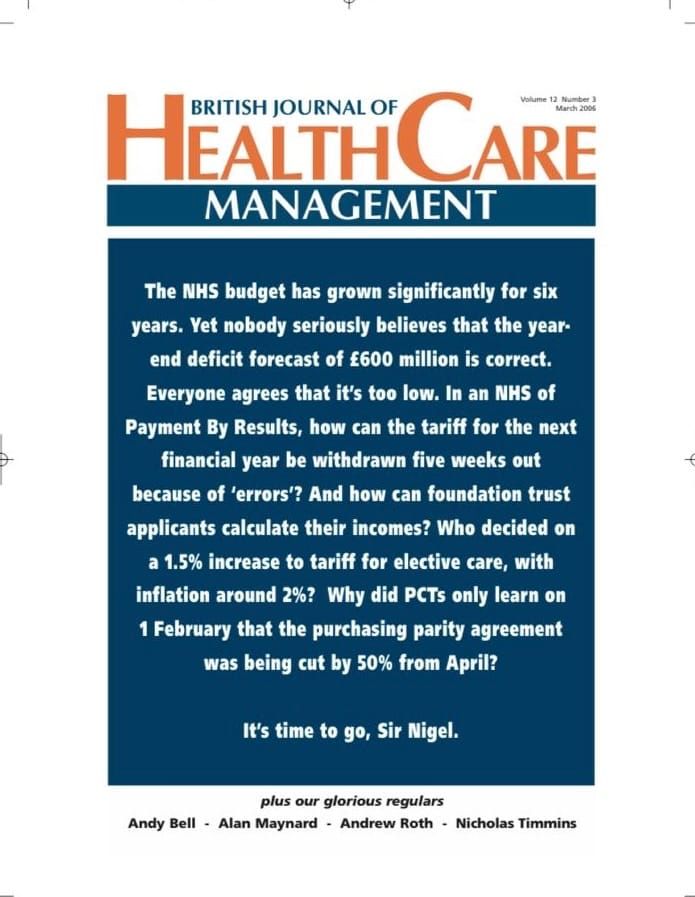
The politics and policy of the NHS in England may not actually be dead, but they do seem quite dead-adjacent. Dead-curious, perhaps.
It’s been a slow decline into the current nothingness and torpor.
Nor is it by any means limited to the current national political leadership under the Team Milburn-Streeting epoch. This era is bad, of course, and off course. It has largely felt like a collage of gesture politics; incessant media briefing; and hammering nails into the coffin of effective, evidence-based health policy - with a big chunk of Tony-Blair-Institute-friendly AI fetishisation thrown in for good measure.
As I wrote at the end of 2025, “Wes Streeting has now been Health Secretary for 18 months: it just feels longer.”
Team Milburn-Streeting’s lack of curiosity about and preparation for the task they were taking on in government was almost heroic. It will surely make an entertaining footnote in the history books of public policy.
It is unsurprising that the attempts to get the English NHS back on a course that hits fairly unambitious targets such as 65% RTT by the end of March are demonstrably failing.
Stage 1 of the failure of health policy: the baroque-and-roll Lansley reforms
I date the start of the decline in English health policy and politics to the 2010-12 period, when national leaders of policy and representative organisations failed utterly to form and express cogent views about the wild implausibility of deliverable success for the proposed Lansley reforms.
God bless those dear, dead days beyond recall! The truly special nature of dear old Lord Lansley’s dreams of ‘a true market’, and his baroque fantasies that choice, competition and clinical commissioning just needed one more big push to really, really work this time!
Only this time, on flat real-terms per capita funding (which lasted for a decade).
Oh, and if you want a really good, bitter laugh, take a look at Andrew Lansley’s 2011 speech on the role of local government in his reforms. The bathos is almost unbearable.
In a modestly sensible world, a lot of health policy and representative organisations and their leaders should feel ashamed and embarrassed of their responses to the Lansley reforms: either for their naivety in believing that the Lansley reforms would basically be fine; or for their abject cowardice in failing to either understand or meaningfully oppose them.
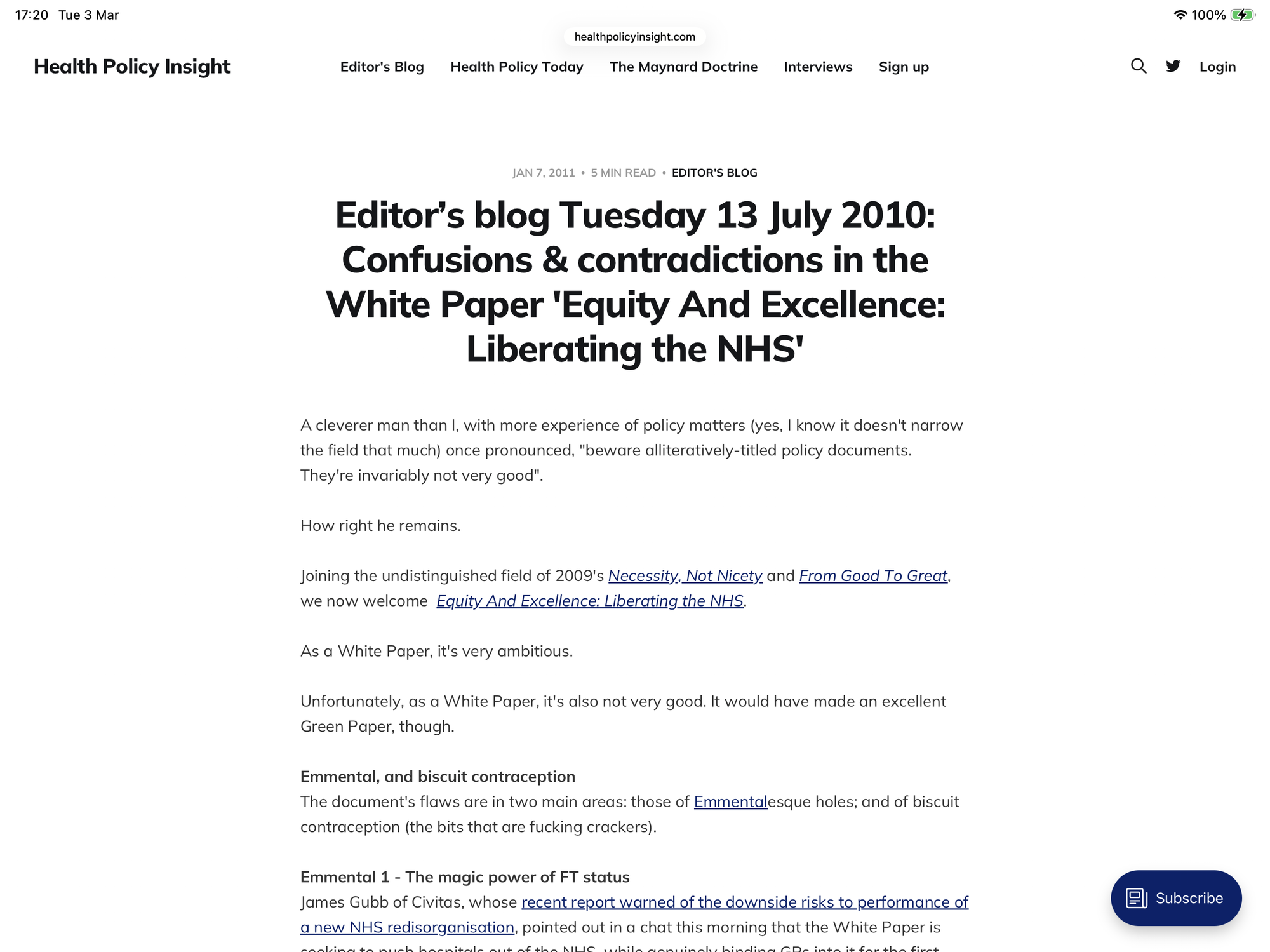
Writing this, I revisited some of my analysis from that time, sixteen years ago. It has aged pretty well. Of the White Paper ‘Equity And Excellence: Liberating The NHS’, I wrote “the document's flaws are in two main areas: those of Emmentalesque holes; and of biscuit contraception - the bits that are fucking crackers … There are a pair of elephants in the 'Equity And Excellence' room. Let me introduce you to them.
“The first elephant is called ‘Culture’. He is a sad-eyed beast, who casts a long shadow. He knows that he has a huge influence on the second elephant, whose name is ‘Behaviour’. This elephant is impossible to control, and she does what she wants despite orders to the contrary.
“The White Paper is not going to mean very much to these two elephants, because it has made the basic mistake of failing to acknowledge their presence and importance.”
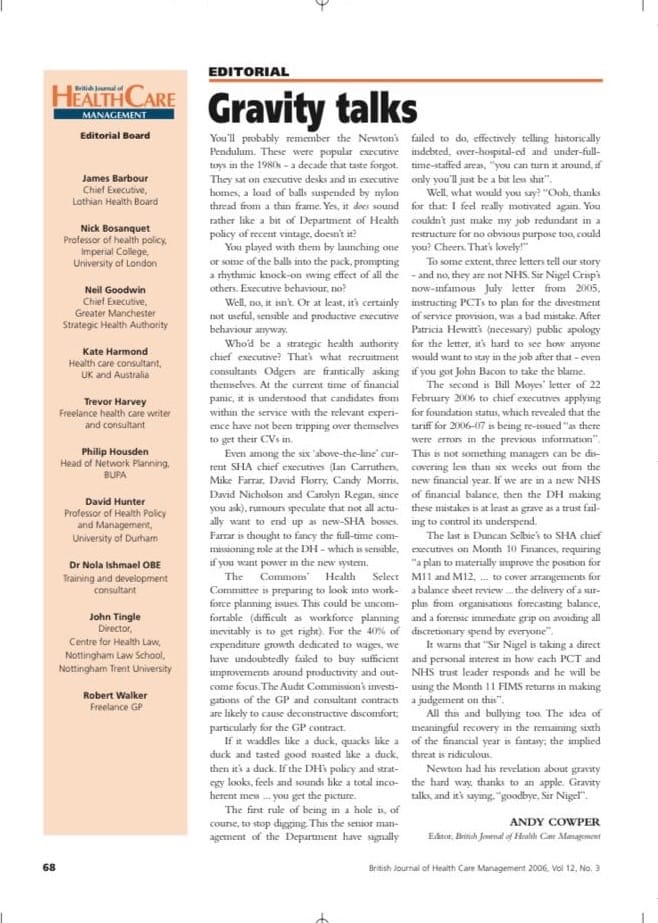
So, yeah, I did my job: writing at some length about what a mess it would be to seek to reduce NHS bureaucracy by replacing 150 local commissioning organisations with 210 local commissioning organisations and by creating ‘The World’s Biggest Quango’ in the NHS Commissioning Board - later rebranded as NHS England.
It’s not as if I’m some kind of health policy Nostradamus. Choice, competition and clinical commissioning had no obvious route to success in an NHS world of flat finances, given that all three relied on non-existent surplus provider capacity if they were to work.
And indeed, unsurprisingly, they didn’t work.
What I wrote didn’t change anything, but at least people could (if they chose to pay attention) be better-informed. As they say in France, ‘that’s life’.
Stage 2 of the failure of health policy: the NHS narcissism years
There’s an arguable case that the London 2012 summer Olympic opening ceremony’s NHS bit led to the sustained outbreak of NHS narcissism. It is, I suspect, almost impossible to imagine any other country in the world putting the creation of its universal healthcare system into the mix in that way.
NHS narcissism and valuing the NHS are two different things. The cohort of the UK population which most values the NHS is the fast-dying one who can remember what it was like before universal, mostly-free healthcare was available.
That pre-1948 era was, of course, one when healthcare could do a lot less, in a time when significant cohorts of the UK population did jobs involving physical labour. It’s interesting to note that the generation which lived through rationing and prior to the industrialisation of cheap, energy-dense and highly-processed food seems to have enjoyed better health and longevity status than those who followed them. Until austerity came along, the research suggests.
Set against that lifestyle change, there is the significant health gain from the decline in smoking. And there is the vastly increased range of things that healthcare can do to extend lives: although not necessarily to extend healthy lives.
 Population Life Events team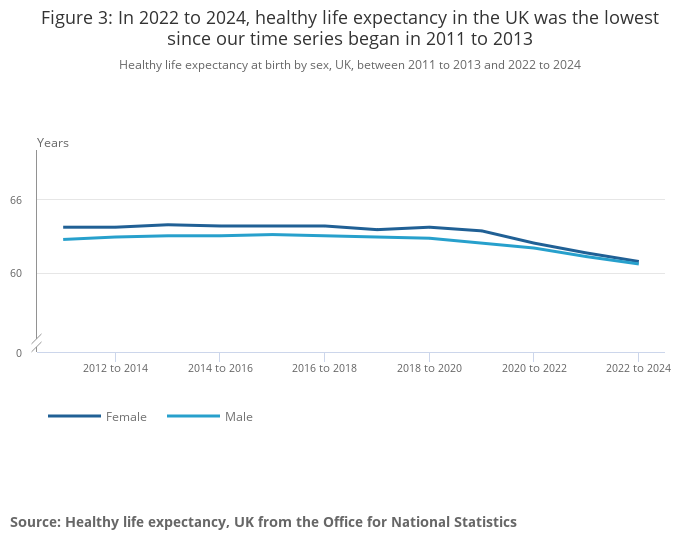
It seems to me that NHS narcissism hit a bit of a peak in the mid-2010s.
You might also remember the concerted campaigns by the policy sector which tried to establish that the winter crises of 2013 and 2014 were going to be ‘the worst ever’ and ‘must never be repeated’. It was, NHS narcissism suggested, to be a ‘thus far and no further’ moment.
Ahem. Didn’t really work, did it?
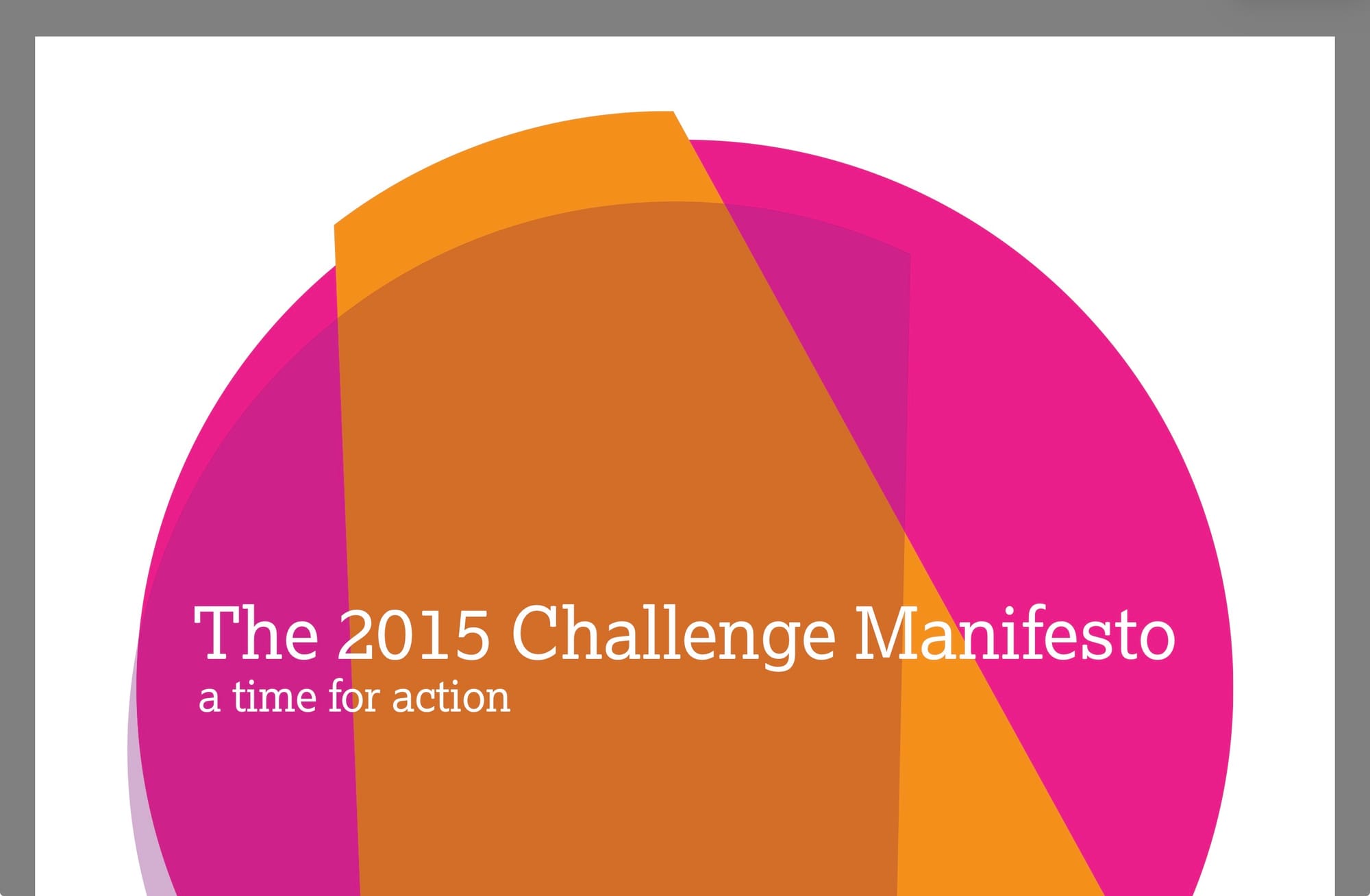
As if it were a Bourbon monarchy’s worth of having learned nothing and forgotten nothing, the sector next seemed to think that it would be a good idea for its contribution to the 2015 general election campaign to be to create a ‘2015 Challenge Manifesto’ agreed across the main health membership and representative bodies and think-tanks.
Like the campaigning events around its launch, this document has not aged gracefully. Never mind that those behind this didn’t seem to wonder whether it’s actually appropriate for the lobbying sector to be issuing something called a manifesto given that they are not standing for any public office and facing the consequent electoral jeopardy, the ultimate test for any political campaign is a simple one; ‘did it work?’
The continuation of the decade of the NHS’s lowest funding in its history and all the associated consequences make it hugely clear that this was not effective. It did not work, other than perhaps to make those involved in its compilation feel temporarily self-important.
Effectiveness is everything, and the health policy sector in the UK hasn’t covered itself in glory for some time now.
The Secretary Of State For Health But Social Care as narcissist
Given that the sector has fallen into the bear-trap of NHS narcissism, it was perhaps inevitable that it would end up getting an heroically deluded narcissist as its Secretary Of State.
In Young Master Wesley Streeting, that is what we have and where we are.
It is not as if there have not been similar appointments hitherto. The Matt Hancock years are a proud testament to the Peter Principle, as seen through the prism of arselicking and narcissism.
But Young Master Wesley, advised by The Quiff Of Doom himself Alan Milburn (not an un-narcissistic Health Secretary in his own day, with his tough-guy posing), truly takes things to a new level.
 Eleanor Hayward, Health Editor | Interactive by George Willoughby, Data Journalist
The national media is belatedly starting to pay attention to Young Master Wesley’s actual delivery, as in this piece by Times health editor Eleanor Hayward.
 Wes Streeting, Health Secretary
Will Young Master Wesley take scrutiny of his performance lying down? You bet he won’t! Thank goodness for a man who “will not surrender to the pessimism of our time”, or as it’s also known, The Real World.
This piece of self-absolution is beyond satire. Even if the great Julian Patterson were to un-retire from NHS commentary, he could not match the sheer chutzpah of claiming that “waiting lists are consistently falling”. Team Milburn-Streeting actually typed that, out loud in The Real World, despite it being obvious and demonstrable bullshit.
Young Master Wesley further suggests that “Further Faster 20 initiative sent teams of leading clinicians into NHS trusts with the longest waits and the highest sickness absence. Without spending more in those trusts than elsewhere, we reduced waiting lists three times faster than the national average. High-flow theatre lists, where clinics run with the efficiency of a Formula 1 pit stop, have played a major role”.
 James Illman
Mmmmmmmmmm. The DHBSC’s overclaiming for this ‘crack teams’ gubbins has already been debunked.
Young Master Wesley goes on to confidently assert that “the NHS has balanced its books”: we shall see what the end of the 2025-26 financial year actually brings.
Recommended and required reading
Social care’s latest reviewer Baroness Casey gave this thumping speech to the Nuffield Trust Summit. It’s a very good speech, too. But it’s just a speech, with no economic backing, political constituency or statutory power.
In last week’s column, I touched on the scandal of maternity. HSJ have this fascinating story about how NHS England’s efforts to bring about a cultural reset for the sector have been a failure.
Thea Stein, Nuffield Trust chief executive, has done research with NHS chief executives on navigating complexity and moral distress.
Good piece by Dr Phil Whitaker in The Times about where the ‘physician associate’ roles have now landed in the aftermath of the Leng review.
Dame Ute Frith, emeritus professor in cognitive development at the Institute of Cognitive Neuroscience at University College London and the person who pioneered much of the research that underpins our current understanding of autism, tells the TES that the autistic diagnostic spectrum has been widened to the point of meaninglessness.
 Rob Findlay
‘Waiting list ends with a sprint but achieves little’, writes Rob Findlay in HSJ. In, erm, 2015.