Cowper’s Cut 412: Letting down the Treasury Munchkins is a niche move

Dave West of Health Service Journal has this cracking exclusive about a secret funding deal between HM Treasury and the English NHS.
 Dave West
Dave has learned that this relates to “plans agreed with the Treasury, but never published, to boost community services spending … developed as part of last June’s spending review, were aimed at tackling the very long waits for community services, especially for children. They were also meant to back up the government’s declared desire to ‘shift’ services out of hospitals.
“According to several sources briefed on the plans, the following was agreed with the Treasury last summer. Out-of-hospital spending would grow by 6.2 per cent in 2026-27 and by 7 per cent in 2027-28. In contrast, acute and mental health services were due to receive annual growth of 2.7 and then 2.9 per cent.
“These targets were translated into indicative figures in financial allocations given to integrated care boards by NHS England, but they were not mandated.”
That is a niche decision, the whole ‘not mandated’ thing. You can refresh your memory about the 2025 Spending Review here.
It gets better, though: “A rough estimate suggests that applying the greater growth to current community health service spending would be worth more than £1 billion by 2028, compared to 2.7-2.9 per cent.
“However, numerous community services leaders across England told HSJ their commissioners were offering no uplifts as part of contract negotiations for 2026-28, which began last month. Many said they were being offered flat real terms funding, the same as other services.”
I don’t need to explain to ‘Cut’ readers that if our beloved friends the Treasury Munchkins have said that they want a thing that is agreed, and then it is not delivered, their reaction is usually not to shrug and go, ‘oh well, that’s life!’
I mean, it is life - but that of those who have let down the Munchkins. I am speaking metaphorically because, at least for the time being, this is not America.
So typically speaking, NHS national leaders don’t annoy the Treasury Munchkins without a very good reason. It is, however, hard to see one in this instance that isn’t about hiding money from scrutiny.
It’s likely that the trajectory of the final two months of the 2025-26 financial year will be about more revelations of English NHS financial deterioration, as recent columns have been signposting and I’ve been predicting for some time.
NHS DeficitWatch
“I am increasingly hearing accounts and anecdotes to the effect that the successful reduction of English NHS deficit spending in the first half of 25-26 may not be sustainable in the second half. Inevitably, a significant cadre of the NHS management community - even those not directly affected - have closely scrutinised this eight-month-long NHSE/ICS redundancy fiasco: people have not been greatly impressed by what they’ve seen.
“The temptation for these people to hide, defer or delay a few significant financial things until - whoops! - they pop up in late Q3 or early Q4 will be considerable.”
Cowper’s Cut 402, 16 November 2025
So what’s emerged this week in NHS DeficitWatch?
 Zoe Tidman
Ahem.
 Matt Discombe
This ongoing drip-drip-drip of utterly unsurprising English NHS deficits emerging in Q4 of 2025-26 means that the likelihood of significant available funding for the discussed ‘elective sprint’ to try to get the NHS to hit the promised 65% 18 week RTT is slender.
The lack of grip over clinical negligence and compensation
The latest report from the influential House of Commons Public Accounts Committee foregrounds one of the major wastes of taxpayers’ money in the English NHS: its spending on generally avoidable harms caused by clinical negligence.
‘Costs Of Clinical Negligence’ lays out the stark financial implications of poor-quality care: “settlement costs for clinical negligence have tripled since 2006–07 and the government has a staggering £60 billion of liabilities on the balance sheet. Annual payments for clinical negligence are expected to exceed £4 billion by the end of the decade.”
This is the fourth report from the PAC on this subject since 2002, yet the report records that English NHS leaders could not point to “any meaningful action” to address this huge problem. In these past twenty-odd years, Shaun Lintern’s made a career out of the English NHS’s deeply cavalier attitude to patient safety. This is a very decent piece by Jeremy Hunt for HSJ, on the topic of patient safety.
In the words of PAC chair Geoffrey Clifton-Brown, “it feels impossible to accept that, despite two decades’ worth of warnings, we still appear to be worlds away from government or NHS engaging with the underlying causes of this issue”.
I covered the PAC’s eye-watering report on ‘Reducing Waiting Times For NHS Elective Care’ just a matter of weeks ago, in late November. Unsurprisingly, this new PAC report puts plentiful emphasis on the massively high costs incurred by the incessant negligence scandals in maternity services: repeated failures at which national NHS leadership has largely shrugged. (Readers will doubtless recall the recent imbecilic Guardian article about Donna Ockenden needing to be paid for her work on the various draining and grim inquiries into these.)
As I wrote in last week’s column, “attempts to decentralise quality and safety to regulators have been particularly ineffective, leaving us with a constellation of shit regulatory Death Stars and a system with too little information on whether its patients’ outcome of care is, in Florence Nightingale’s formulation, ‘relieved, unrelieved or died’.” I have, as readers know, been writing about the NHS national leadership’s incredible lack of curiosity about the underlying factors that drive performance for a long time now.
Interim Jim Mackey, the temporary leader of NHS England as it ambles towards abolition, clearly agrees with me about the English NHS’s curiosity deficit: he told the PAC report launch that “nearly everything that’s gone wrong in my career, from a clinical point of view, lots of people have known about it. But the organisation responsible hasn’t been connected with them [surgeons], curious enough, listening enough, or been acting on it.
“It does come back to the board doing its job, individuals being curious, being willing to challenge, being willing to go to places that they don’t want to go.”
Interim Jim added, “one of the things we want to really try and do in our work is restore the necessity for boards to have good oversight but also deploy curiosity carefully. Because often behind these things you see a very serious lack of curiosity and acceptance at face value of data, which I’ve learnt in my career you can’t ever do. The data’s poorer now than it’s ever been”, as Shaun Lintern reported.
Is Spire selling?
 Alex Ralph, Chief Business Correspondent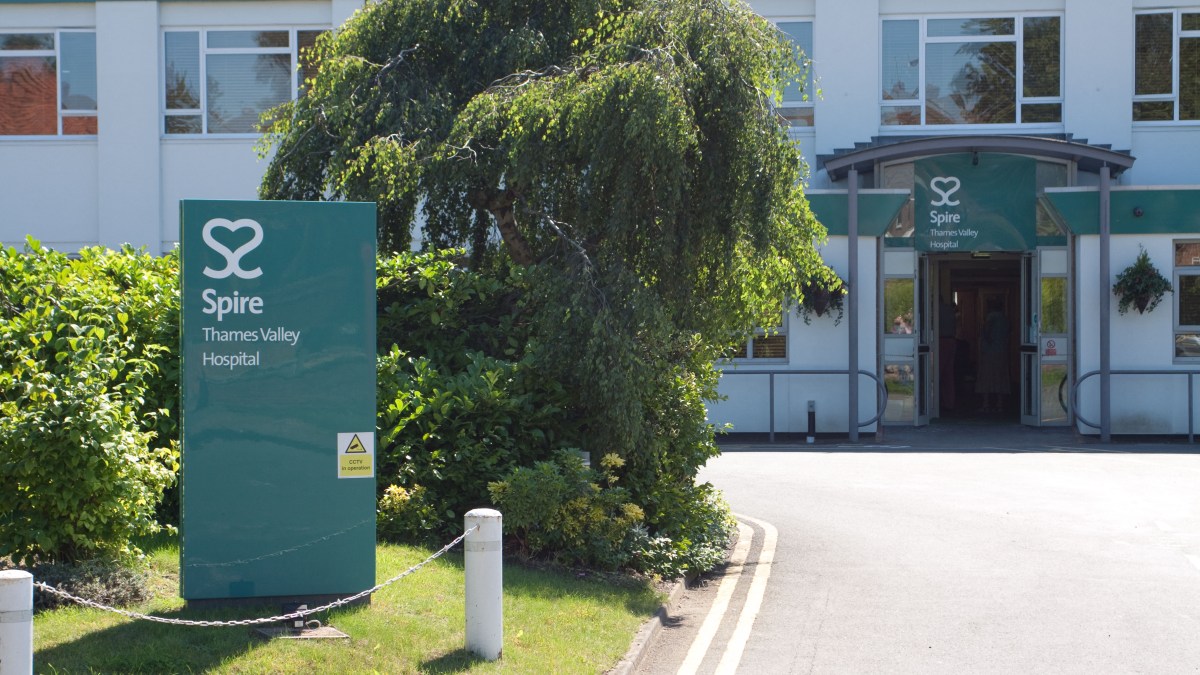
The Times’ chief business correspondent reported this week that Spire has entered preliminary discussions with private equity firms who are interested in acquiring the company.
Spire are a significant provider in UK healthcare: one of Britain’s largest private healthcare companies. They were formed in 2007, from the sale of BUPA Hospitals to private equity firms Cinven. Spire runs 38 hospitals and more than 50 clinics, medical centres and consulting rooms; also running a network of private GPs. Its assets include about £1.4 billion of freehold property.
The Times piece reports that Spire’s shares “were weakened in December 2025 by an unscheduled trading update in which Spire warned of “material uncertainty” over NHS volumes across the private healthcare sector, which sent shares to their lowest price since April”.
Recommended and required reading
Another barnstorming ‘Mythbuster’ from Steve Black in HSJ, this one on the poor measurement of long waits in A&E.
Curious Financial Times piece alleging the rise of the ‘National Health State’.