Cowper’s Cut 409: People who need people
The appointment of Danny Mortimer as the Department For Health But Social Care’s and NHS England’s new director-general of ‘people’ is an interesting one. I mean, he’s a person, so I guess there’s that much to be said in its favour.
Mr Mortimer has been the leader of NHS Employers since November 2014. This is the DHBSC-funded bit of NHS Confederation which, its website tells us, “is the employers’ organisation for the NHS in England. We support workforce leaders and represent employers to develop a sustainable workforce and be the best employers they can be. We also manage the relationships with NHS trade unions on behalf of the Secretary of State for Health and Social Care.”
Mmmmmmmmmm.
OK. First and foremost, how has NHS Employers gone under his long tenure of leadership? Have we developed a sustainable workforce? Are English NHS organisations the best employers they can be?
Um. I doubt that many people feel that English NHS workforce matters have been A Triumph over this period. The 2023 NHS workforce plan was, unfortunately, little more than a joke.
The NHS Staff Survey’s latest round found that 72% of respondents would feel secure raising concerns about unsafe clinical practice, but just 57% were confident that their organisation would address their concern.
Now clearly, this is not all down to Danny and to NHS Employers. It would be harsh to say that the medical and non-medical industrial action we have seen throughout his tenure was his fault. (Here is a link to the NHS England documents showing that the service kept very significant amounts of work on schedule throughout the most recent resident doctors strike in December.)
But there is more than this to consider. Were NHS Employers a body that we should take seriously on workforce issues, then we’d reasonably think that it’d have had something to say about the Government’s decision to abolish NHS England and hugely cut back integrated care boards without having funding available for the redundancy implications (given that managers and administrators are NHS employees, too).
But it isn’t, so it didn’t.
NHS Employers was invented back in 2004 to be a means of diffusing tension with the workforce: in political terms, its job was to depersonalise the Health Secretary’s role in rows over pay, terms and conditions.
Clearly, it failed pretty utterly in this regard: in the junior doctors’ new contract fights of 2015-16, nobody believed that Jeremy Hunt was not largely driving the response; and in the current resident doctors’ industrial action, it is equally clear that Team Milburn-Streeting have been pulling the strings.
That approach fitted with a New Labour/New Public Management faith in what you could call denationalising and contracting out/arms-length-bodying. Philosophically, these trends were of a piece with PFI, Foundation Trusts, independent(ish) health regulators and ultimately, having an independent NHS Commissioning Board.
NHS recentralisation
The NHS Commissioning Board, now NHS England, is now being abolished under the tenure of Interim Jim Mackey. The drift back to the Secretary Of State being unambiguously in charge began with the ‘more Matt Hancock’ reforms that became the 2022 Act.
We are (as these columns have repeatedly noted) living through a period of English NHS health policy and politics with no clear and effective operating system for operating, let alone one for reform and improvement.
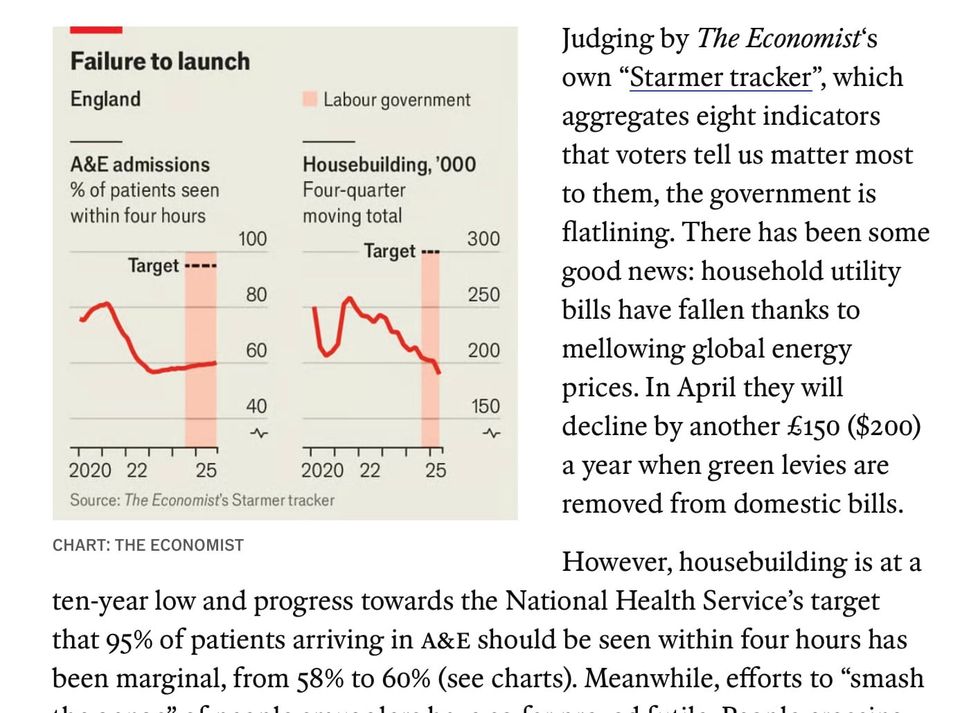
In so far as national leadership has an operational plan, it is about delivering something like financial balance: this is necessary, but not nearly sufficient. Progress towards Labour’s manifesto commitment to re-establish 18-week RTT by 2029 currently remains in reverse gear.
The ‘triple shift’ is at best an ambition; it is 100% not a plan. The ‘Neighbourhood Health Service’ likewise is a catchy phrase in search of a workable definition, let alone for incentives, structures and means of roll-out.
 Holly Mitchell
Winter in the English NHS has once again been catastrophic in far too many places, with corridor care the subject of the HSSIB’s new report.
 Matt Mathers
It is now well and truly thereafter, and winter in the NHS remains dreadful.
The culture around workforce
Then, there are the culture issues around workforce - ooops, sorry: people. Fine words and indeed actual policies on the Freedom To Speak Up and the Duty Of Candour have largely been forgotten or sidelined. But hey, NHS Employers gave us this infographic!
Bullying remains a huge problem throughout the NHS, as this excellent House of Commons Library 2024 report reminds us and as the 2022 Messenger Review unambiguously stated. It is well worth taking the time to read this disturbing new report from Roger Kline on the calibre of investigations, be they NHS-commissioned or self-portraited.
You can look at all that and decide whether Danny Mortimer is a good appointment. But people clearly didn’t, so there he is. A person very firmly of the existing system’s modus operandi and architecture is now to be in charge of people. Plus ça change: plus c’est la meme chose.
Post-implementation evaluation innovation
Innovation is alive and well, and living in NHS England.
No, really. How else can we explain their launch of a £600,000 tender to find an evaluation partner for the Federated Data Platform programme, for which Palantir’s consortium won its contract in 2023 and the roll-out of which began in April 2024.
Why, yes, it is now indeed mid-January 2026. Health Tech Newspaper reported that bid “submissions … will be assessed first on technical criteria (quality), before commercial (price) and social value (quality) criteria. An award decision is expected around the end of January 2026, with contract dates running from February 2026 to February 2029.
“A separate contract worth £35,000 was awarded earlier this month by NHS England to London-based Akeso and Company Limited, with research objectives to understand customer needs and motivations, and identifying challenges faced by NHS trusts and how the FDP can address them.
“The four-month contract, which is due to end on 31 March 2026, also looks to assess awareness and understanding of the FDP, and to explore attitudes and sentiment toward the platform “including perceived benefits and drawbacks”.
Sigh. Long-time readers know that I was a paid member of Palantir’s health advisory panel in the two-year period leading up to their contract win. I’ve previously written here about the panel’s explicit advice to Palantir and its stakeholders that the real work would only just start if the contract were won, because successfully implementing change in the NHS is very hard and requires brilliant planning, stakeholder engagement and management and relentless focus on making the product deliver tangible short-term gains - the ‘pull factors’.
Relying on the ‘push factors’ of ‘NHS England says you’ve got to do this’ was never going to work out terribly well, and indeed hasn’t. The ‘FDP: what we’ve achieved’ section is remarkably skinny and undetailed.
The further the FDP rollout goes over budget, the more money is unavailable to those developing the NHS App.
Axel the centrifugue
 Prime Minister’s Office, 10 Downing Street
I did not know that an Axel was a complex figure-skating move: a jump in skating from the forward outside edge of one skate to the backward outside edge of the other, with one (or more) and a half turns in the air.
Axel Heitmueller, recently the Prime Minister’s Expert Adviser on health has clearly created a good impression in the Starmer team: he has been appointed as head of the PM’s Delivery Unit and Expert Adviser on delivery. Good luck, Mr Heitmueller!
Recommended and required reading
A depressing sign that integration pioneer Torbay And South Devon FT may end its 20-year partnership with Torbay local authority, as the cost to the Trust of delivering adult social care services exceeds the funding by £35 million a year.
In a rare bit of smart policymaking which probably won’t lead to a prompt U-turn, the Government proposes to put NHS staff into probation meetings.
A whistleblower has told The Guardian that reforms at Porton Down are not going quite as they should. This seems important.
Read FT Alphaville’s brilliant piece on the ‘magic’ of AI. Read it now.
Dame Carol Black’s back on drugs. As in advising about, obvs.
A lesson about ending PFI contracts for schools: health should heed it.
The fax: axed. Well, sort of.
I mentioned Euan ‘son of Tony’ Blair’s heroic self-publicity for his firm ‘Multiverse’ a few columns ago: Blair Minor’s firm has just booked a big loss. Read this excellent deep dive into Blair AI Inc’s COIs and nepotisms by ‘Signal Not Noise’.
Devi Shetty tells the Boris Johnson Fanzine that his software can save the NHS.