Cowper’s Cut 426: A Streeting named desire

Like nostalgia, the gift of prophecy isn’t what it used to be. Still, it seems clear from opinion polling that the Labour Party (currently in office, if far less obviously in power) is about to get walloped badly in this week’s local elections.
PM Sir Keir Starmer is unpopular with voters, although as this Full Fact analysis shows, this unpopularity gets somewhat overblown in prevailing political commentary.
A few quick observations: incumbent politicians are enormously unpopular almost everywhere in Western Europe. Starmer’s Labour made a series of notable and avoidable errors (from the U-turns on means-testing winter fuel payments to the U-turn on the two-child benefit cap to Lord Alli’s Donationgate).
Most members of what is now the front bench had done far too little work in preparing for office: this is particularly true in health, as these columns chronicle and as I noted on the eve of the 2024 General Election: “we know very little (other than headlines and vibes) about Labour’s detailed plans for NHS reform. This is probably because they don’t have any, but if they do, they have been subjected to zero public scrutiny or consideration.
“That omission is probably going to be important”.
Are there any grounds for mitigation?
Yes, a few: Labour inherited the nation’s finances in very poor shape, having boxed themselves in by their campaign pledges not to raise the main tax rates (although they then raised employment tax).
They have to contend with the President of the United States of America being an increasingly unhinged and unfettered populist economic gangster, whose war in Iran will trigger more inflation.
The NHS and its workforce had not been meaningfully recovered from the Covid19 pandemic: nor did the inadequacy and paucity of system management and reform efforts under Amanda Pritchard’s tenure as NHS England chief executive help. Meanwhile, demand for additional state support for special educational needs and disability support have continued to rocket.
It would be surprising if Labour were not fairly unpopular.
Will this trigger a Labour leadership challenge before the next ‘Cut’ hits your inbox?
A few thoughts: the one probable candidate with positive public approval ratings, Mascara Kid Andy Burnham is not an MP, and so cannot stand if an immediate challenge arises.
For all her briefings that a resolution is imminent, Angela Rayner (almost certainly the Labour membership’s preferred option) still faces an unresolved HMRC inquiry over her tax affairs. Ed Miliband claims not to want to be Labour leader.
And then in the opinion of many Westminster lobby journalists, there is the ‘microwaved Blairism’ option, courtesy of Health But Social Care Secretary Young Master Wesley Streeting. As lobby opinions go, this is a fascinating one. It has the qualities of what Rupert Sheldrake defined as ‘morphic resonance’: basically, the hypothesis that once an idea has been had somewhere, it is more easily had again somewhere else on a ‘non-imitative’ basis. Most of lobby journalism can only be explained by a unique cocktail of morphic resonance and making shit up.
Those who have found themselves having to pay any attention to the wonders of lobby journalism will understand it as having many of the qualities of astrology and homeopathy, but without any of their credibility or use value. Lobby journalism is for true believers: as such, it is a huge contribution to why British media has become the wearying shit-show that it is today.
 Daniel Green
The Parliamentary Labour Party of 2026 is essentially a soft-left grouping. Have a look at the Labour List poll of members’ preferred Cabinet members, if you don’t believe this.
And here are the rules which govern how Labour will run any leadership challenge. They state that “candidates seeking to enter the ballot must be an MP. Candidates must be nominated by 20% of fellow Labour MPs … to progress, candidates must also be nominated by:
• 5% of constituency Labour Parties (CLPs), or
• at least three affiliates of the Labour Party (at least two must be trade unions) where the combined membership of nominating affiliates should be at least 5% of affiliated membership. Affiliates are groups or organisations which have interests consistent with those of the Labour Party; they include trade unions and co-operative and socialist societies”.
These are the facts of the matter (and the facts do not care about the feelings of the tiny minority of Wes Streeting partisans). Given these facts, it is far from clear that Young Master Wesley Streeting will be able to meet those criteria.
Wes Streeting might well want to be the next Labour leader, but there is very little evidence that the feeling is mutual.
Mackey: EPR implementations a mess
 Zoe Tidman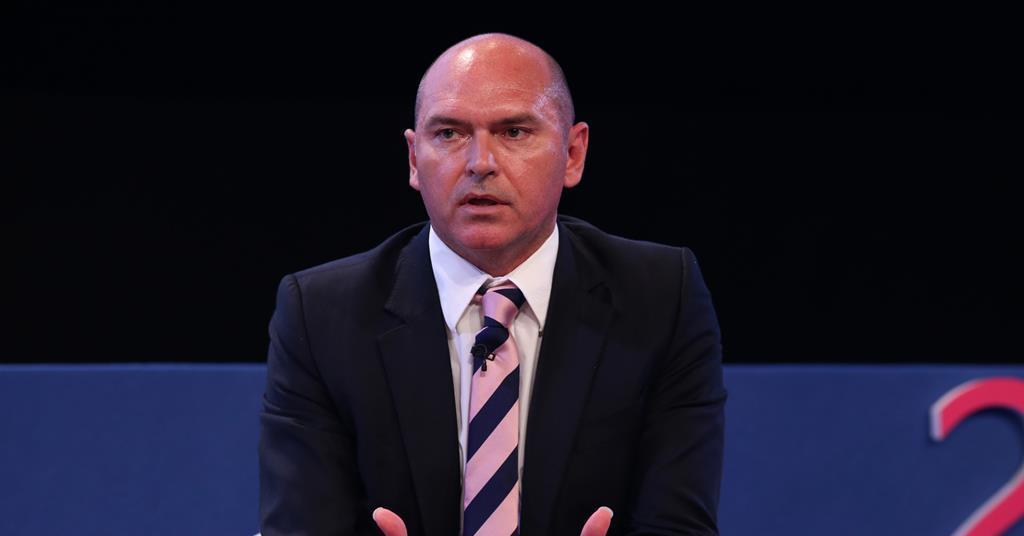
It was interesting to read Health Service Journal’s report of NHS England interim boss Sir James Mackey’s remarks about electronic patient record implementations at the NHS Strategy Summit this week.
Interim Jim told the event that the implementation of electronic patient records was “really poor … I think we’ve overpaid… [and] we treat every installation as though it is a single one that has never happened before, which is really annoying.
“Until we started really trying to get a grip of this in the autumn, we hadn’t had one in England that hadn’t meant the organisation had gone into a black hole [or faced a] degree or turmoil.”
This is particularly interesting to me because as some readers know (and as I mentioned a few weeks ago), at last summer’s Cambridge Health Network summer drinks hosted by McKinseys, I asked a Q&A panel including NHS England’s chief analytics and data officer Ming Tang what lessons national technology leaders and the service could profitably learn from the fact that after many years of implementations, new hospital installations of electronic patient records (EPR) systems were still usually accompanied by dramatic collapses in the hospital’s performance.
Ms Tang tried to suggest that this was an inaccurate statement, to sharp intakes of breath and laughter from those present.
It is an interesting moment when the orthodoxy of one particularly low-quality part of NHS England’s old senior leadership team is being so publicly debunked. But Jim is only interim.
Recommended and required reading
Henry Anderson and Zoe Tidman
Good analysis from HSJ’s Henry Anderson and Zoe Tidman on the opacities and uncertainties about national financial support for trusts and systems.
The controversy over Palantir’s Federated Data platform contract is not going anywhere, Laura Hughes of the Financial Times has this balanced-seeming piece on the ‘not terrible, not revolutionary’ software. (My usual COI declaration: I used to be paid for my advisory work on Palantir’s health advisory panel between 2022 and 2023.)
Dan Neidle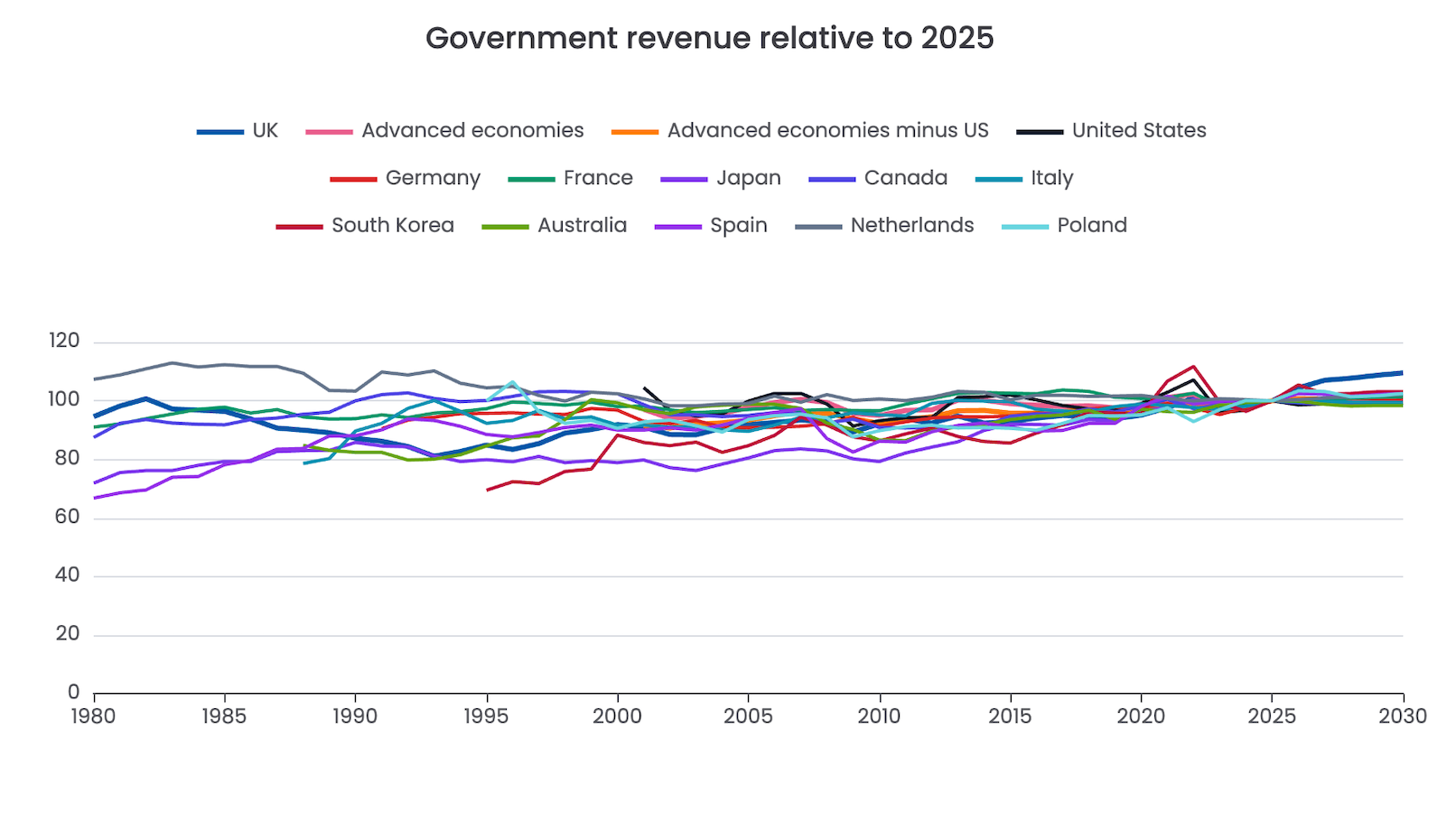
Depressing accuracy from Dan Neidle of Tax Policy Associates: UK taxes are going up and public services will get worse.
In the wake of the recent Health Foundation report on the decline in UK healthy life expectancy, the Financial Times’ John Burn-Murdoch looks at whether the metric being used is really appropriate.
The Kings Fund’s Ruth Robertson on why the NHS needs a ‘slow policymaking’ movement.