Cowper’s Cut 424: Health Secretary Wes Streeting to fight the power of Health Secretary Wes Streeting

Wes Streeting, the rail replacement bus service of Health Secretaries, has been all over The Discourse this week.
It takes quite something to get me to feel sorry for The Discourse, but there you go.
Wes Streeting: strong political leader
In a Q&A following his speech to the Institute For Public Policy Research NHS funding model event, Young Master Wesley defended his unexpected abolition of NHS England in self-flattering terms: “I can understand why so many of my predecessors didn’t bother, and just sat there with a totally unsatisfactory bureaucracy …
“The level of opposition [and] the weight and volume of vested interest is just extraordinary … This is why you do need strong political leadership … there are so many professional vested interests – with a quiet, easy life – who will always oppose these big changes.”
Mmmmmmmmmmm. And are these professional vested interests here in the room with us now, Young Master Wesley?
The IPPR report itself is a statement of the obvious about funding models: that they do not actually guarantee higher performance.
It is unsurprising (although irritating) that this particular health policy zombie has to be shot down with such monotonous regularity.
Alas, that is the downside of living in our current world of opaquely-funded ‘political think-tanks’; and a national media so largely made up of specialist journalists who are not in any slight way specialists, and opinion piece writers who are in almost every way ill-informed arseholes.
“Power to the patients!”: Streeting x Boris Johnson Fanzine
There may be worse-considered and less-evidenced ideas than patient power payments, but there probably are not many.
God bless the Boris Johnson Fanzine, which is once again home to Young Master Wesley Streeting’s immortal musings on how health policy and politics should work.
Young Master Wesley’s article starts off in what seems refreshingly close to The Reality-Based Community: “the NHS has a problem with basic, everyday sexism and an appalling culture of medical misogyny”. For once, he is Not Wrong.
Alas, soon we learn from the Young Master that “our renewed Women’s Health Strategy is our response to these injustices”. It is difficult to name national strategies that have made durable impacts in recent times, but perhaps we should admire the Young Master’s optimism.
So, perhaps we should consider whether there is a potentially effective method of change on offer here?
Over to Young Master Wesley: “we’re going to give women the power to kick medical misogyny where it hurts – in the bank balance. Starting with gynaecology, women will be asked whether their care was good enough, and if money should be withheld from providers and used for targeted improvements instead.
“If women say services are falling short, funding will be used to drive improvement – taking power from the institution and putting it in the hands of patients”.
Oh.
That’s … different.
Possibly even courageous.
So have patient power payments ever demonstrably worked, anywhere?
The one article I can find in peer-reviewed literature, from 2025 in France, is unambiguously clear that they do not work. Its abstract says, “this paper examines a reform of the French healthcare system that aimed to empower patients and improve their access to care, but led to various adverse consequences for patients. Specifically, already socio-economically disadvantaged groups of patients found their positions becoming even more precarious …
“This healthcare system-level analysis highlights the need for patients to be the direct focus of healthcare system reform and the importance of considering their position within the power network for understanding reform outcomes.
“This attention to the power network adds to the extant theorisation on the effects of funding mechanism reform on the nature of patient empowerment and access to healthcare”.
Ooooops.
I mean, clearly Team Milburn-Streeting (The Pathetic Sharks of health policy) will have thought about this one, and done proper research before loudly announcing it. Won’t they?
Won’t they?
Wes Streeting to fight the power of Wes Streeting
Still, the centralising under way means that it will be quite the spectacle to watch insurgent patients’ friend Wes Streeting fight the power of supreme NHS system leader Wes Streeting.
Penny Dash: the six trillion dollar woman
There are mistakes that you just don’t make, if you want to be considered serious.
And describing the NHS’s un-used or under-used mental health real estate as being worth three trillion pounds is one of them.
 Annabelle Collins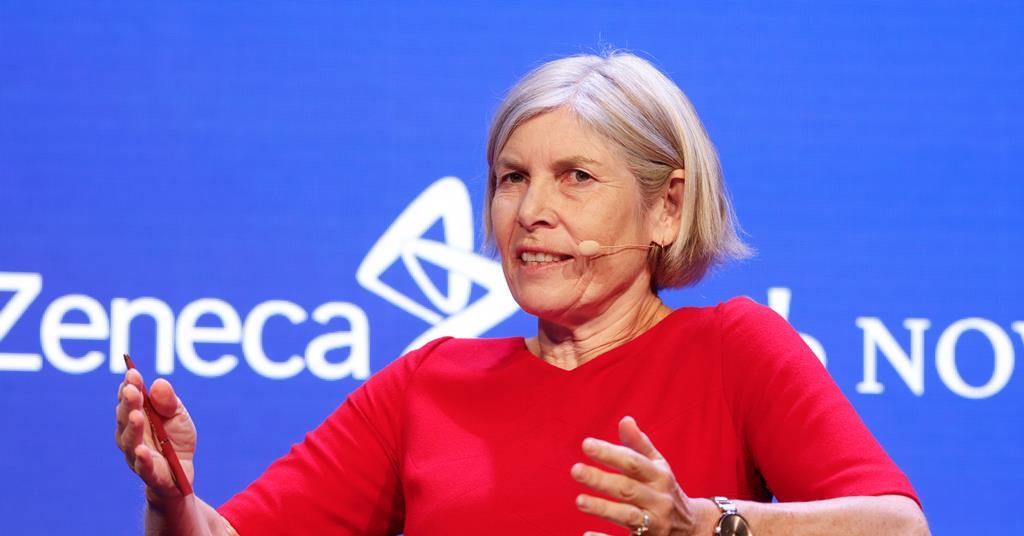
Ooops … because that’s what NHS England’s pro tem chair Dr Penny Dash did at the NHS Alliance mental health conference this week. She told the event that “you have to challenge [that] there is not enough money in this sector,” and described her findings on trust estates as “dramatic” …
“The most staggering one is the amount of land owned – I assume [it] is the legacy of the old asylums. 1.5 million hectares of land owned by mental health trusts. If you apply the land value, if that had planning permission, that is worth over £3 trillion.”
Mmmmmmmmmmm.
Right.
Dr Dash’s mis-stated numbers (even if we leave aside the wildly speculative issue of land value with imputed planning permission) were clearly complete bullshit, on a rudimentary appraisal of ERIC valuations, as an anonymous commenter on HSJ’s coverage observed: “the latest version of the Estates Returns Information and Collection (ERIC) is for 2024-25. Within the site level publication this contains the "Land area owned (hectares)" for each site that has submitted data. Filtering this for Mental Health providers gives a sum of 1,456 hectares.
Ministry of Housing, Communities and Local Government
“Now, granted that there may well be issues with the completion of ERIC and land that is owned by providers that is not relevant to the submission, but that is still only 0.1% of the figure quoted”.
Dr Dash later contacted Health Service Journal, to correct her mis-speech such that the correct figures were 1,500 hectares and £3 billion.
Can people not make mistakes? Oh yes, indeed they can.
But errors of this order of magnitude (1.5 million hectares playing 1,500, and £3 trillion playing £3 billion) are not trivial. They show unmistakable unseriousness.
Why would you not get trillions wrong? Because the entire UK economy is a total of about three of them. “A trillion here, a trillion there: pretty soon, you’re talking real money …”
Have a look at this useful House of Commons Library publication on very large numbers.
Nobody who wants to be operationally credible in UK public policy - literally nobody who is not the Chancellor, or running a financial think-tank - talks about economic units of trillions of pounds.
That isn’t a conceivable mistake for a serious person to make.
RTT performance: better, but still not good
The latest data on RTT performance for February found more slight improvement, but still nowhere near enough to be on trajectory to hit the Labour manifesto target of returning to 95% 18 weeks performance by 2029.
The waiting list for routine hospital treatment fell to 7.22 million. This is the lowest in over 3 years. For urgent and emergency care in March, 77.1% of patients waited less than four hours in A&E departments (short of the NHS’s interim 78% target for 2025/26). Ambulance services almost achieved the 30-minute interim standard for emergency calls.
Rob Findlay
As ever, Dr Rob Findlay’s review for HSJ is a definitive picture poor what is and isn’t being achieved.
Recommended and required reading
NHS England issued guidance for the minimum threshold to qualify as a Neighbourhood Health Centre as just two functions: sites must have an on-site general practice, and a community health or integrated neighbourhood team presence. Centres must be open at least 12 hours a day, six days a week. Who lives in a house like this?
Chelsea resident NIMBYs go after the Marsden redevelopment, The Times reports.
The FT’s Sarah Neville considers the question of whether private healthcare in the UK is helping or harming the NHS? The answer is, of course, yes.
‘Should you really trust health advice from an AI chatbot?’ The answer is, of course, no, BBC News. See also: this FT piece.
It’s an intriguing index of the popularity of resident doctors’ strikes that The Grauniad published these two letters from named NHS doctors, both opposing the current industrial action as being neither use not ornament.
Intelligent comment piece in HSJ by Raza Rahman on cultural differences and NHS reform.