Cowper’s Cut 415: “Mutual consent”

In the light of this past week’s events, I’m reasonably content with how my political analysis in last week’s ‘Cut’ aged.


Contrastingly, Health But Social Care Secretary Young Master Wesley Streeting’s self-styled Prime Ministerial ‘heir presumptive’ vibe continues to age rather less gracefully, as national media speculation (ranging from the merely silly to the fairly silly and all the way on to the very silly) about Young Master Wesley’s role in any potential Labour leadership challenge shows.
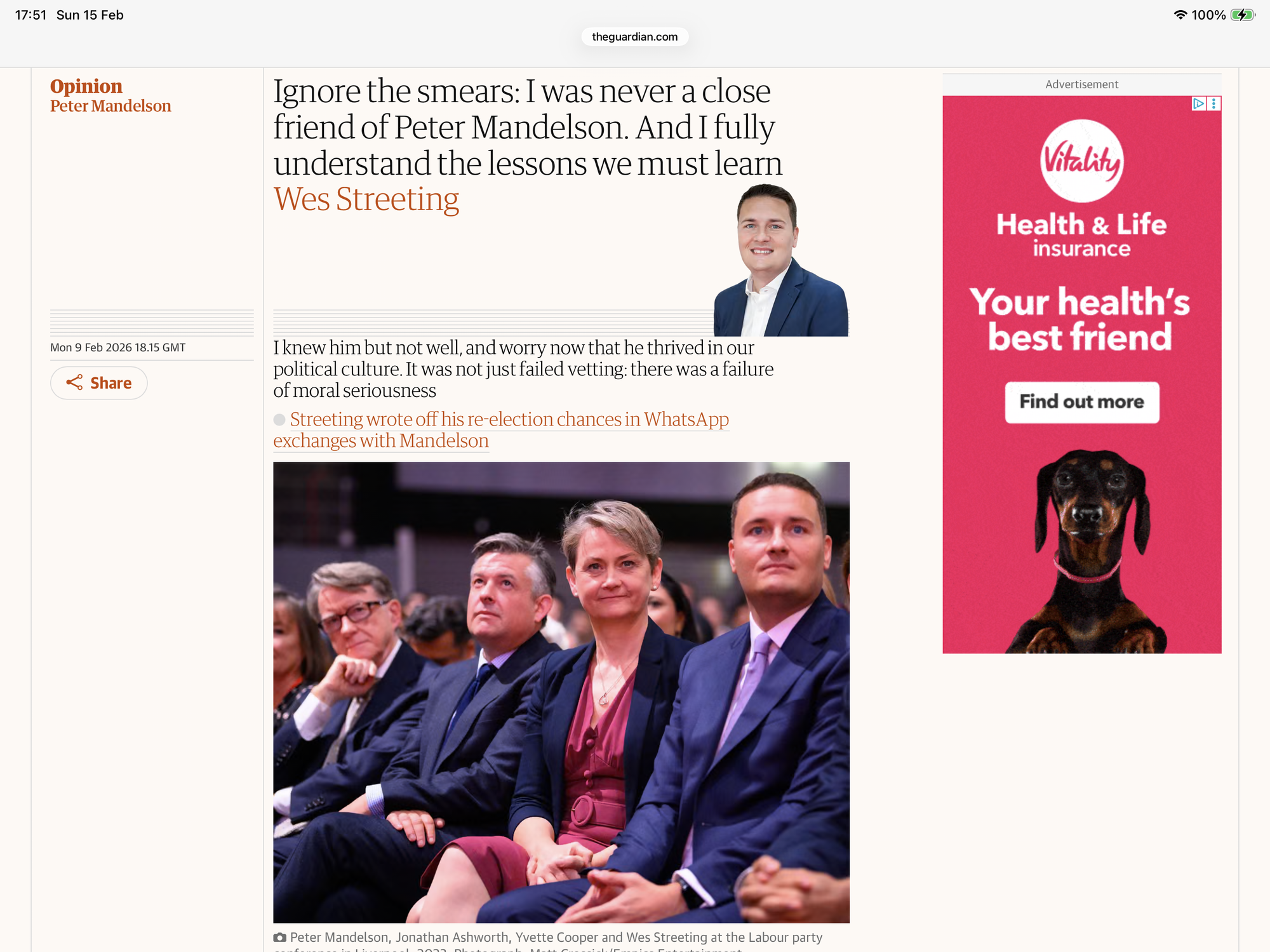
One must have a heart of stone not to laugh at the bathos of Young Master Wesley’s comment piece for The Guardian, declaring that he was “never a close friend of Peter Mandelson”. You can almost feel the innocence glowing off the text, can’t you?
Young Master Wesley’s Guardian article goes on to make the subject-changing assertion that “this is a scandal, first and foremost, about the way men treat women and girls – and not just monsters such as Epstein, but through everyday sexism. We cannot allow that terrible truth to disappear.
“I have seen it in the NHS I lead. From victims of some its worst scandals to women such as a close female relative, whose severe pain was ignored by her male doctor not once but twice until her male partner vouched for her pain. Even the NHS, founded on principles of equality, ignores women’s voices and experiences.”
The issue of NHS everyday sexism is an interesting and important point in and of itself.
However, it is nothing to do with the main issue of Mandygate: the fact that such a senior Labour figure as Lord Mandelson of Foy lied repeatedly to the civil service and the PM about the nature and duration of his ongoing and pretty evidently corrupt relationship with disgraced paedophile financier Jeffrey Epstein, as part of his interview process to become the US Ambassador.
It is absolutely a failure of the process of Lord Mandelson’s appointment that this red flag was not kept flying by somebody involved.
Chris Wormald’s exit by “mutual consent”

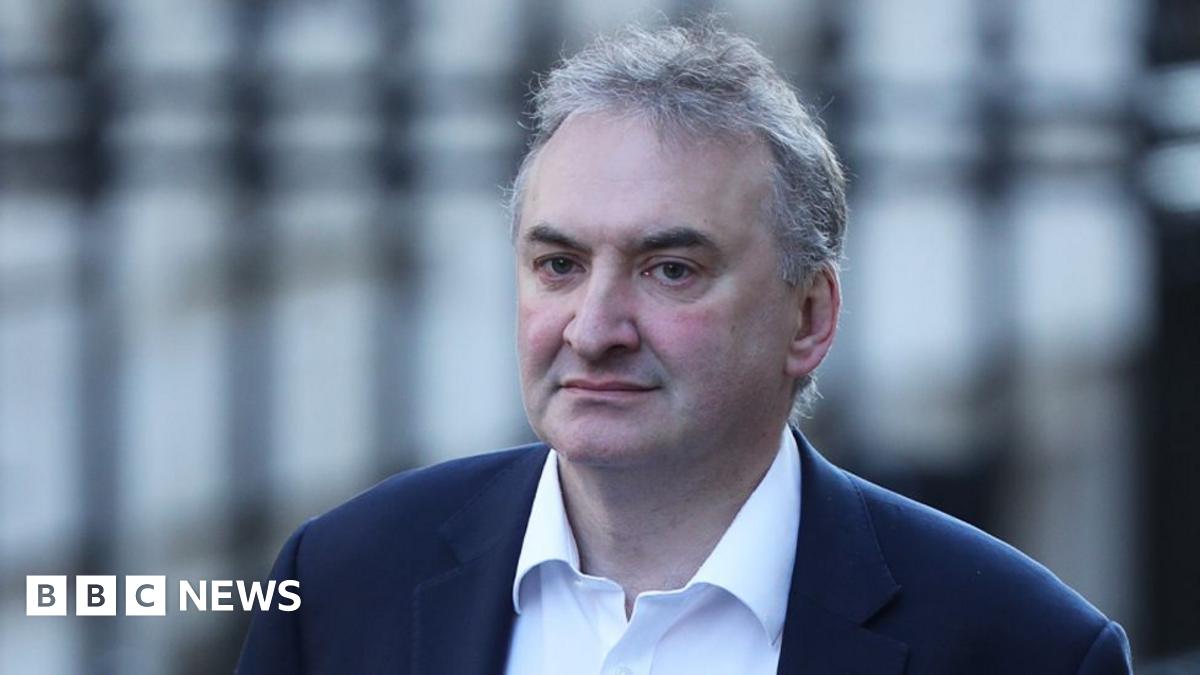
This fed Number 10 the pretext for the dismissal “by mutual consent” of Sir Chris Wormald: the man who was comfortably the most bizarre and inappropriate conceivable choice as Cabinet Secretary and head of the civil service, as anybody who knew anything about his tenure as the Department For Health But Social Care’s permanent secretary could and would have told you.
“Mutual consent”.
Mmmmmmm. I’ve never heard it called that before.
 Cabinet Office
Readers will recall the PR nonsense around Chris Wormald’s wrong-headed appointment to the job in December 2024 as insisting that Wormald was the man who would really shake up the civil service and Cabinet operational scene. Levers would finally be attached to things!
The PM’s official statement at that time talked about the “complete re-wiring of the British state to deliver bold and ambitious long-term reform … Delivering this scale of change will require exceptional civil service leadership”.
This was to be led by Chris Wormald. Former DHBSC perm sec Chris Wormald.
Right.
Sir Chris Wormald is to dynamic organisational reinvention what Graham Norton is to ‘The World’s Strongest Man’ contest: perhaps perfectly adequate within the boundaries of what he has thus far done, but not in any way suited to the mighty task required.
Sir Chris had the change dynamic capacity of a stoat that died in 2017, and was entombed in a lead-lined concrete box.
And this was not even remotely a secret.
The Prime Minister’s decision to appoint Sir Chris, when the actually capable Tamara Finkelstein was available, demonstrated just how epically dysfunctional and fundamentally ignorant the administrative apparatus of Whitehall and government had become - and remains.
The British Social Attitudes, they are a-changing
It remains difficult to see how the Starmer administration can turn its current crisis into an opportunity for a relaunch, but it will somehow have to do so.
This week, NatCen released some data from the forthcoming British Social Attitudes survey to the Financial Times, which reveals that “a record share of people in the UK say taxes and public spending should be cut … the latest BSA report, published on Tuesday by the National Centre for Social Research, showed that 19 per cent of people said taxes and spending should be reduced: the highest since comparable data was first available in 1983, and more than three times the all-time average of 6 per cent.”
I don’t need to explain to ‘Cut’ readers the seismic importance of this. The BSA is highly reliable data. Growing public scepticism towards the value for money of public spending will not be good news for the NHS, as one of the biggest areas of public spending, particularly when its current performance towards waiting and financial targets is not great.
The FT piece also notes that “a separate analysis on Tuesday by the Resolution Foundation showed growth in disposable income for working-age families in the poorest half of Britain slowed sharply in the 2020s … with incomes set to increase just 0.5 per cent annually during the 2020s, it would take 137 years for lower-income families to see the doubling of living standards that had previously been enjoyed every 40 years.”
Performance anxiety
The latest data release on English NHS performance is not very reassuring.
 Rob Findlay
The total RTT waiting list for procedures and appointments stood at 7.29 million in December 2025, down from 7.31 million in November 2025. As ever, Rob Findlay’s analysis for HSJ is a compelling read on the real issues at play here.
There were 2.32 million attendances at NHS A&Es across England in January 2026, making it the busiest January on record. Of these, 161,141 patients waited more than four hours from a decision to admit to hospital to being admitted: the second-highest number on record. 71,517 patients waited more than 12 hours from a decision to admit to hospital to being admitted in January: the highest on record. And in January 192,168 patients who attended A&E were there for more than 12 hours: the highest number in records going back to February 2023.
The NHS delivered 18.4 million elective treatments and operations in 2025 (up from 18 million in 2024).
 Zoe Tidman
This is behind NHS England’s decision to issue productivity league tables. Now this is not necessarily a bad move, if it is being done in tandem with meaningful efforts to understand and support improvements in the root causes of NHS provider organisations’ poor, mediocre and indeed good performance (as I have written in these columns far too many times, the national system leadership has a worrying curiosity deficit on these matters).
The problem here is that there is scant evidence of any such initiatives.
 Dave West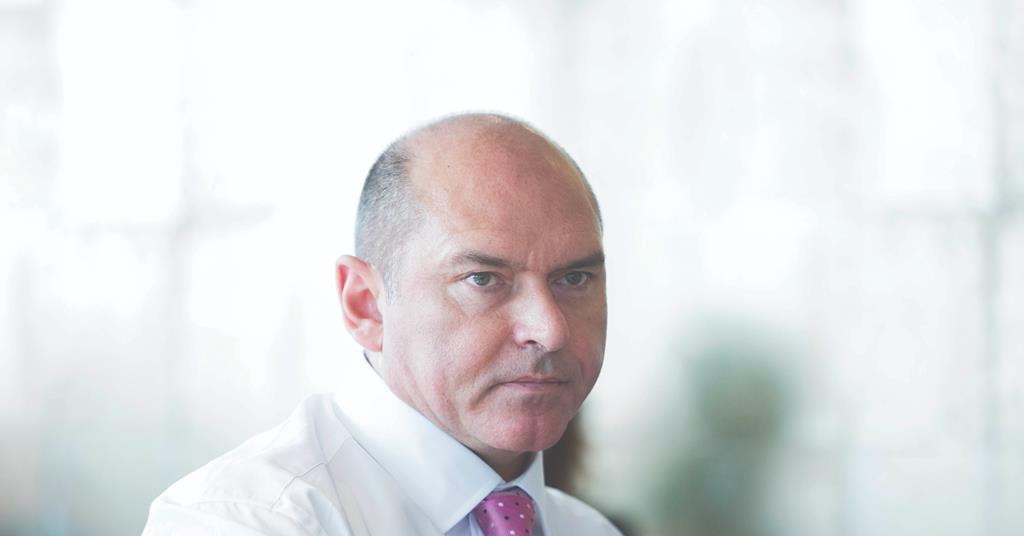
Likewise, it was interesting that Sir James Mackey chose a podcast with two former Conservative ministers to inform a grateful nation that ”the NHS needs a “reset” of its “deal” with all of its staff – improving working conditions in return for performance and productivity”.
Again, this is not necessarily wrong. Nor is it necessarily a terribly smart forum in which to disseminate this rather vague promise of a ‘new deal’.
Recommended and required reading
Another excellent HSJ ‘Mythbuster’ column from Steve Black on why the NHSE must get real about its failure to meet demand. Also worth reading alongside this is Andi Orlowski’s HSJ comment piece on why the cost of healthcare won’t be reduced by the mythical ‘triple shift’.
This Kings Fund long read asks ‘Should we be concerned about a forecasted doubling of health care spending?’ Obviously, if the UK economy is not growing commensurately, we should.
 Robert Booth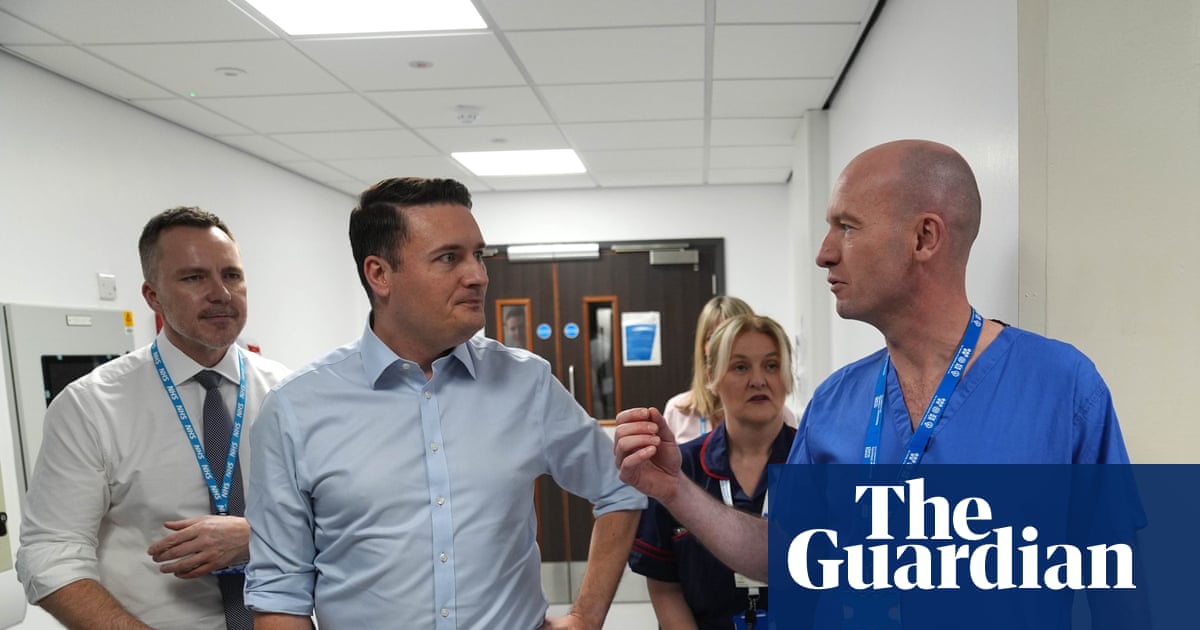
Palantir (on whose health advisory panel I was a paid member for a couple of years) is back in the news, with the BMA kicking up to The Guardian about the FDP after FOI work revealed civil servants have noticed the firm’s reputation. Intriguingly, Michael Burry, the investor behind ‘The Big Short’ for the US subprime mortgage market, has written on his Substack that he believes Palantir to be monumentally overvalued amid the AI hype.
Interesting Guardian long read about overdiagnosis of mental health issues.
The FT reports that millions of women in England get one round of IVF on the NHS.
I do sometimes wonder whether my memes have become autonomous. You know: like AI, but somehow far worse.