Cowper’s Cut 403: It’s a big mess, you say?

“In Whitehall we were very worried about the promises they (Labour) made before the election on not raising taxes because we obviously knew the true state of the public finances that would face them on arrival.”
Simon Case, ex-10 Downing Street Cabinet Secretary, speaking to The Guardian
The report of the second section of the Covid19 public inquiry, on ‘core decision-making and political governance’, dropped this week.
It states that “the obviously escalating nature of the crisis made it surprising that COBR, the UK government’s crisis coordination committee, was not chaired by the Prime Minister, Boris Johnson MP, until 2 March 2020 and that neither COBR nor the UK Cabinet met during the half-term holidays in mid-February 2020.
“Mr Johnson should have appreciated sooner that this was an emergency that required prime ministerial leadership to inject urgency into the response. Mr Johnson’s own failure to appreciate the urgency of the situation was due to his optimism that it would amount to nothing; his scepticism arising from earlier UK experiences of infectious diseases; and, inevitably, his attention being on other government priorities.
“This was compounded by the misleading assurances he received from the Cabinet Office and the Department of Health and Social Care that pandemic planning was robust, as well as the widely held view that the UK was well-\prepared for a pandemic.
“As the pandemic unfolded, the Secretary of State for Health and Social Care, Matt Hancock MP, gained a reputation among senior officials and advisers at 10 Downing Street for overpromising and underdelivering.”
It also puts proper emphasis on the now-cabinet secretary and then-DHBSC perm sec Chris Wormald for failing to “rectify the overenthusiastic impression” that Matt Hancock had given to No.10 about the Department of Health and Social Care’s ability to cope with the pandemic ... and already I can feel ‘Cut’ readers switching off from this - from reading anything further about the pandemic.
It’s a sentiment that I understand and share. Wanting to revisit that time is something that many of us don’t do.
If you don’t already know Professor Lucy Easthope’s work on dealing with disasters, then you should. She wrote, “life doesn’t simply carry on around the suffering as it once did. It is universal, less hidden; we are all disaster survivors now. We will feel the effects of Covid-19 for many years to come.
“The government’s response to the Covid-19 pandemic has included hefty doses of fear in the messaging. People are afraid – of the virus but worse, of each other. The place that we find ourselves is spectrum-opposite from that on which a healthy recovery is built. Historically, as a pandemic wanes, the pogroms and the rioting begin. Whether we follow that path is up to us.
“We have never been on more of a knife-edge than we are now; fear is a dark genie that is not easy to put back into its bottle. Its effects will linger long after things feel more under control.”
Professor Easthope is powerfully right. We are still in the early stages of starting to understand what the pandemic did to us as a society, economy, nation and health system - and I suspect that there remains a very long way yet to go.
We knew back then that the Johnson Government were neither use nor ornament
Partly, we may also want to turn off because we actually already knew a lot of what the Report now officially tells us.
The Covid-19 pandemic’s arrival in the UK triggered the second run of ‘Cowper’s Cut’ in Health Service Journal, starting here and ending here, and I believe that those columns chronicled much of this quite effectively back then.
But a weekly column in a sector-specific publication has one level of impact, and the report of a public inquiry has - or should have - a much greater one.
Will it, though? There was remarkably little widespread public discontent about the Dominic Cummings blatant rule-breaking at the time. It wasn’t really until the Downing Street parties became public knowledge that things became rather more complicated for Team Boris.
Something which still doesn’t get the emphasis it deserves is the PR slogan ‘Protect The NHS’. Because that would beg the question, ‘why does it need protecting?’
And that would involve a set of very uncomfortable conversations about the fact that the 2010s austerity decade saw the lowest GDP per capita growth in NHS funding in its history.
You can create as many Nightingale Potemkin facilities as you like, and it won’t distract effectively from the fact that the NHS was already deeply in the shit before the pandemic hit.
That the RTT backlog was 4.4 million pre-Covid.
That every NHS winter crisis that decade was ‘the worst ever’, until the next one topped it.
That we appear to have had a much worse hospital care recovery post-pandemic than any other comparable country.
I’m proud of having written in my first column about the pandemic that “we’ll also need to address big second-order issues, such as the impact on very long waiting patients of an NHS elective shutdown of any significant duration”.
But that didn’t happen.
I’m equally proud of that column’s emphasis on the need to deal with the psychological pressure on staff.
But that didn’t happen, either.
Other and more credible people than an independent commentator made the NHS staff welfare point powerfully, at that time and subsequently.
You look at all of that, and you have to wonder whether the English NHS is an organisation without a memory.
And if you’re the staff, who experienced all of that - where for long periods of time, going to work felt a lot like risking your life without people valuing your risk-taking - well, maybe the NHS productivity puzzle gets a fair bit less puzzling.
More unwelcome reports of reality intrude
The Commons Public Accounts Committee report on ‘Reducing Waiting Times For NHS Elective Care’ and the Institute For Government’s ‘Performance Tracker’ reports published this week also added to the sense of reality intruding into discussions about NHS performance.
The PAC document does not fuck about: “NHSE missed its recovery targets by significant margins. By July 2025, 22% patients waited more than six weeks for diagnostic tests. This is far higher than the standard of 1%. Waiting times for treatment were also above targets, with patients on only 59% of clinical pathways being treated within 18 weeks of referral, against a target of 65% by March 2026 and the ultimate goal to reach the standard of 92% by March 2029.
“NHSE’s management of these transformation programmes was extremely variable. Diagnostic and surgical transformation programmes received billions of pounds of funding without any focus on outcomes for patients, at a time when capital funding across government is scarce.
“While these programmes delivered additional capacity, they did not reduce waiting times as intended. The outpatients programme could have made the most difference to waiting lists as 80% of elective care waiting times end through an outpatients appointment, yet NHSE did not have a credible plan for transforming outpatients services. NHSE achieved a reduction of only 0.1% in outpatients appointments against a target of 25%.
“Following the absorption of NHSE, the Department of Health and Social Care (DHSC) will take on responsibility for managing these three programmes. Unless it gets a grip on the programmes, there is a serious risk that it will not meet its target for 92% of the waiting list to be treated within 18 weeks by 2029.
“At the same time, we have significant concerns that the reform of NHSE and DHSC, as well as local NHS services, has been announced without either delivery plans or funding in place”. Phew.
Its conclusions and recommendations are even more damning: “NHS England’s plans to transform outpatient services were not credible, even though it had already acknowledged that more efficient outpatient services would make a material difference to the waiting list …
“NHS England did not secure meaningful clinical engagement on the programme, despite the more successful programmes having benefitted from clinical support. These failures happened despite NHS England telling the previous Committee in 2022 that improvements to outpatients services had the most potential to free up clinical time …
“NHS England should set out what it has learned from the failure of the outpatients programme and use this to inform its plans for the future of the programme”.
Look! The F word! They said ‘failure’, out loud in The Real World! Taxi for Amanda Pritchard!
But it gets even worse, which is going some: “We are not confident that the Department is being realistic about the immense effort needed to reduce NHS elective care waiting times, and see a significant risk that digital solutions are being treated as a ‘cure-all’ as the 10 Year Plan is being implemented.
“While NHS England and the Department for Health and Social Care have outlined an ambitious programme for future change, the current picture of performance for transformation is poor. The integration and sharing of digital records across the NHS is a key weakness and the NHS lacks some of the basics in IT connectivity, with General Practitioners, hospital trusts and consultants still working on different systems”.
But surely, if we do just a bit - OK, a lot - more wishful thinking, everything will be fine? Isn’t that how this works?
No, apparently not: “NHS England’s performance to date has not demonstrated that it can secure the clinical engagement that will be necessary to transform waiting lists. … while NHS England has now set new incentives and priorities, the scale of engagement necessary to achieve full clinical support for the outpatients programme remains a significant challenge”.
The PAC report even dares to suggest that Team Milburn-Streeting’s left hand does not know what its further-left hand is doing on English NHS reform: “we are concerned that the Department for Health and Social Care and NHS England are still announcing major reforms without either delivery plans or secured funding.
“We do not accept that it is prudent to make a major change, such as the structural changes that are being made to Integrated Care Boards (ICBs) and NHS England without ensuring there is funding in place to pay for the changes, and without conducting an impact assessment or taking other steps to safeguard value for money”.
Ah, impact-schmimpact; value-for-money, schmalue-for-money! This is just the sort of quibbling over minor details that prevents us from enjoying ‘NHS Reform: The Milburn-Streeting Performance Era!’, popcorn and all. The PAC report even dares to say that “we are concerned that these poor practices, previously seen with the New Hospitals Programme and the High Speed 2 programme are being replicated here and will lead to wasted effort”.
As all the many external consultancies involved in the New (If Fictional) Hospitals Programme and HS2 will tell you at great expense, these programmes are in fact Great Triumphs. They may not, however, be too clear on the public value aspects of these GTs.
IfG report finds health is in a mess
The Institute For Government’s annual ‘Public Services Tracker’ has become another key part of the public sector landscape. Its sections on health, linked at the top in the R&RR list below, tell us things about the English NHS with which ‘Cut’ readers are wearily familiar.
That doesn’t make them less valuable, of course. The IfG’s considerable reputation makes these things much harder to ignore. Its review describes the ‘triple shift’ ambitions as being “admirable aims. But they are also reforms that previous governments have attempted and largely failed to deliver. Streeting will need to overcome substantial institutional, financial, and political barriers to deliver his promises”.
It is fair on the government’s record since the 2024 general election, calling it “mixed. There have been minor performance improvements in hospitals, a fall in hospital staff turnover, and a substantial uptick in the number of salaried GPs.
“At the same time, there is evidence of increasing financial pressure in hospital trusts, industrial action by resident doctors is once again dampening activity, and the government has forced the service to focus time and money on abolishing NHS England (NHSE), reorganising integrated care boards and making redundancies, at the expense of a focus on improving performance.”
The IfG report accurately analyses the emerging tension between the triple shift’s preventative aims and the fact that the Labour manifesto commitment was to the acute-based RTT return to 18 weeks by the time of the next election in 2029.
It is also clear-eyed on the impulsive decision to abolish NHS England, which contradicted various prior on-the-record commitments by Health But Social Care Secretary Wes Streeting. There were, as I have often written in these columns, valid arguments that NHS England had become a largely useless organisation: the output of its supposed ‘improvement’ function, NHS IMPACT, show that it could not have been more ironically named.
NHSE’s general ineptitude was, as the IfG note, not much of a secret to anybody paying attention.
It seems fairly likely that the Team Milburn-Streeting decision that triggered NHSE’s demise owed much to the long tradition of NHSE leadership trying its luck by complying grudgingly, partially or late (if at all) with ministers’ whims, requests and ‘dictates’.
When Simon Stevens was the organisation’s chief Machiavel, his command of all the detail and the legislative position meant that he could pull this off with a certain verve and elan. Amanda Pritchard’s attempts to carry on doing the same trick were never going to have the same success, even had nothing material changed in legislation.
But what became the 2022 Act changed things greatly. As I pointed out when the White Paper was leaked to me, that was the end of meaningful independence for FTs and indeed for NHSE itself: the proposed legislation “effectively neuters NHS Foundation Trusts, removing their independence from direct control by the Secretary Of State For Health, as well as ending the system for developing them, with the formal abolition of Monitor (known now as NHS Improvement) and the Trust Development Authority.
“It unambiguously puts the Secretary Of State For Health back in charge, in a massive political land-grab. This is in charge of both the overall system; of each local Integrated Care Systems; and of the NHS Commissioning Board (known now as NHS England).
“The Secretary Of State resumes formal powers of direction: for the SOS to have more power in this way, the chief executive of NHS England must of course have less.” And not unlike Simon’s subtle subversion of the Lansley reforms with the Five-Year Forward View, it took a remarkably long time after that for most people to notice what was happening.
As the IfG concludes, “the abolition of NHSE has so far been a case study in how not to make complex policy decisions and announcements. Putting aside the process, there is also a good chance that abolishing NHSE will not result in the types of performance improvements that Streeting hopes, particularly between now and the next election.
“Reorganising the NHS’s superstructure is a time consuming and distracting endeavour. It will monopolise attention and resources in the centre of government and NHS systems for at least the next two years. By the time the new NHS structure is settled, the next election will be fast approaching, leaving little time for the new system to deliver performance improvements.
“While the status quo is odd, there is also no perfect institutional structure for the NHS. Whatever emerges from this reorganisation will also be imperfect, albeit in different ways.” Quite so.
The BMA Resident Doctors 2008 Pay Differential Historical Re-Enactment Society goes from strength to strength
It would seem that events have developed in a manner not necessarily to the advantage of The BMA Resident Doctors 2008 Pay Differential Historical Re-Enactment Society. Anecdata suggests that strike turnout was again well down; un-named doctors were quoted in The Times attacking the BMA’s stance; and the NHS England media release claims that 95% of planned elective care went ahead during the strike.
RDC chair Jack Fletcher’s statement was bullish: “The Government has an opportunity to come back to the table and get a deal over the line. If it chooses not to then we will be forced to take more action in December. We know it is not easy – I wanted to be at work today – but I’m out here … because we are not going to accept tens of thousands of our colleagues being turned away from the NHS and another real terms pay cut.
“We have already moved the Government, and we can move them again. We are hopeful that they will come back to the table now and offer us something credible on jobs and pay.”
It’ll be interesting to see whether there is an appetite among resident doctors for further industrial action in December. These are tough months to stand on picket lines, in the absence of public support.
Something in the heir
It will not have escaped readers’ attention that I am slightly sceptical of the torrents of healthcare AI hype that have been pouring out of the Tony Blair Institute, funded generously as it is by the Larry ‘Oracle’ Ellison Foundation.
The Boris Johnson Fanzine this week revealed that there must be something in the heir as regards AI hype: Mr Blair’s son Evan’s ever loss-making firm Multiverse (formerly WhiteHat) has done a tie-up deal with Palantir, and the BJF gave them this large chunk of free editorial advertising to promote AI as the salvation of the NHS. Of course.
I suspect a better headline for the BJF puff piece might have been ‘Euan Blair’s Company Multiverse Faces Doom Loop If It Can’t Sell AI To The NHS’.
 Alex Ralph, Chief Business Correspondent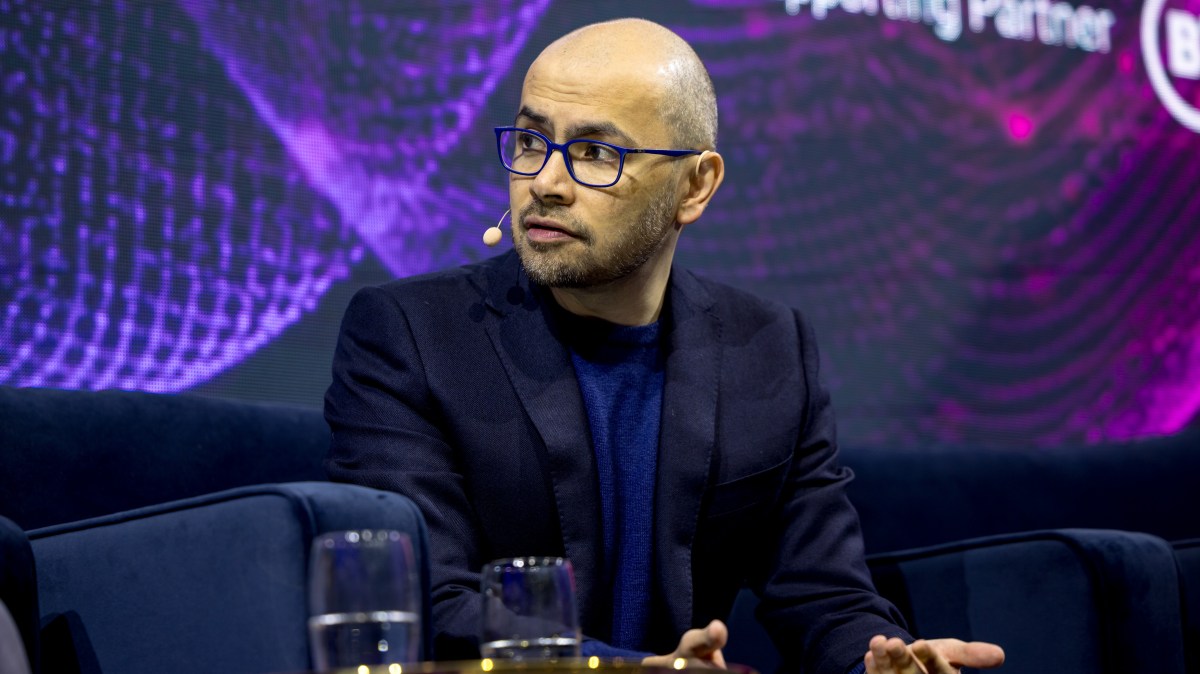
Oh … and thank goodness for this warning from the Tony Blair Institute about the UK’s risk of falling behind in biotech infrastructure, regulation and financing. I wonder if Demis Hassabis wants something building for him?
Recommended and required reading
The Institute For Government’s essential ‘Public Services Tracker 2025’ is now out, with vital sections on the NHS, hospitals and primary care.
“Our British national health service, with treatment free at the point of delivery, is the envy of the world. It is the best system of health care that I have ever encountered … We have reformed the NHS so it is much better managed and much more efficient. It is no good opposing these improvements, because when waste is reduced, more can be directed to higher quality patient care. This means that patients get more treatment and care out of every extra pound that we spend … The NHS will continue to grow and continue to improve. We are totally committed to the national health service as a public service providing high quality up-to-date treatment, free at the point of delivery. By our decisions on public spending, we prove that the NHS remains at the top of the Government’s priorities. The NHS has been safe in our hands, it is safe in our hands and it will always be safe in our hands.” It’s Budget Week, as you may have noticed, and Kenneth Clarke’s last Budget for the John Major government is an entertaining read.
Speaking of finance, the FT reports that NHS landlord Primary Health Properties is lining up bankers at Rothschild & Co to sell a hospital portfolio potentially worth about £700 million, in what The Real Pink Paper reports would be one of the most sizeable UK real estate assets to be put on the market in recent months.
Pinprick blood tests to predict diseases 10 years before they are noticeable? Maybe.
New data analysis by The Guardian on GPs working less than full time.